

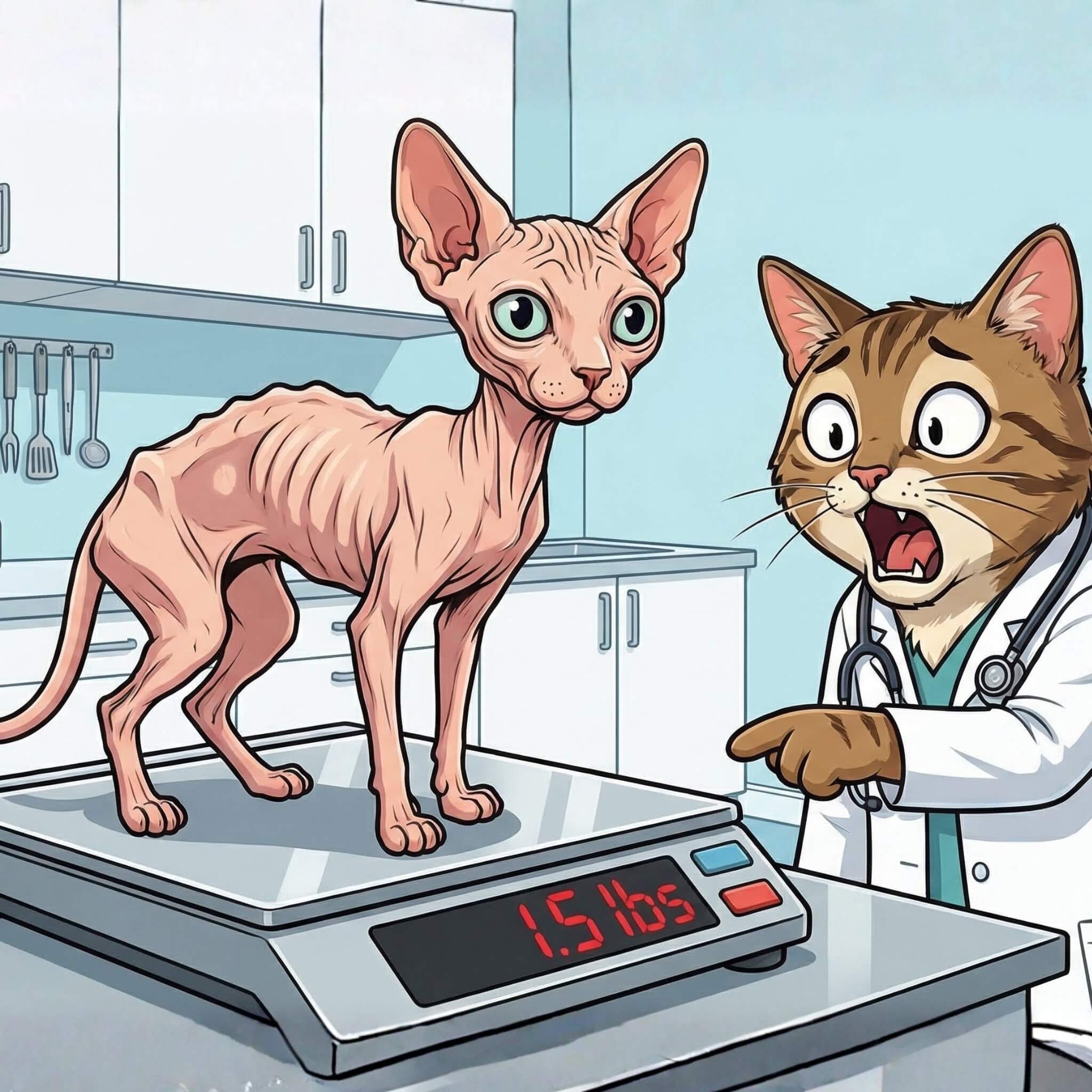

A skinny cat does not always need “more food and more treats.” Some cats are naturally lean, but others lose weight because something is wrong: reduced appetite, dental pain, stress, competition with other cats, digestive disease, hyperthyroidism, diabetes, kidney disease, parasites, or another medical problem. The safest approach is to work out why the cat is thin before trying to push calories harder.
This guide explains how to tell the difference between a naturally slim cat and an underweight cat, which red flags should move veterinary care to the top of the list, what feeding strategies actually help, how to handle picky eating and multi-cat stress, and how to support healthy weight gain without simply creating a softer cat with poor muscle condition.
- Cat Weight Calculator — check whether your cat looks naturally slim, borderline, or clearly underweight.
- Cat Calorie Calculator — estimate a more practical calorie target for maintenance or gradual gain.
- Cat Age Calculator — convert cat years to human years to better understand your cat’s life stage, senior status, and age-related changes.

🐈 Is Your Cat Naturally Slim or Actually Underweight?
This is the question that matters first. Some cats are naturally long, fine-boned, elegant, and lightly built. Oriental-type cats, active young adults, and some individual house cats can sit on the leaner side without being unhealthy. A cat can be slim and still have a visible waist, good muscle tone, normal appetite, strong energy, and a glossy coat.
An underweight cat usually looks different. The spine, hips, or shoulder blades may stand out more than they should. Ribs may be too easy to feel. The back end may look weaker or flatter because muscle has been lost. The belly may look tucked because the whole cat is running light, not because the cat is especially athletic.
✅ Signs a cat may simply be lean
- Defined waist, but not hollow-looking
- Ribs are easy to feel but not sharply prominent
- Good energy and normal play tolerance
- Stable body weight over time
- Good appetite and normal stool quality
- Coat and grooming remain normal
⚠️ Signs a cat may be underweight
- Visible spine, hips, or pelvic bones
- Noticeable muscle loss over the back end
- Weight keeps drifting downward
- Poor appetite or eating struggles
- Dull coat, weakness, or lower stamina
- Vomiting, diarrhea, or other illness signs
The most useful way to judge this is to combine the scale with body condition. A body condition score chart is much more helpful than “my cat looks skinny to me.” For a visual framework, the WSAVA cat body condition score and muscle condition score charts are excellent references, especially when a senior cat looks lighter because of muscle loss rather than simple fat loss.
🚨 Red Flags: When a Skinny Cat Needs a Vet First
Not every thin cat is in trouble, but some situations should move veterinary care ahead of food experiments. The biggest mistake owners make is assuming that weight loss is just pickiness, aging, fast metabolism, or stress when the pattern actually points to disease, pain, or poor intake.
📞 Seek veterinary advice promptly if your cat:
- has not eaten properly for about 24 hours
- is losing weight quickly or steadily
- eats but still keeps losing weight
- vomits often or has repeated diarrhea
- has bad breath, drooling, or seems painful around the mouth
- drinks or urinates more than usual
- seems weak, withdrawn, dehydrated, or less social
- is a senior cat losing visible muscle over the hips and back
Weight loss despite a decent or even strong appetite is especially important. That pattern can be seen with conditions such as hyperthyroidism or diabetes. A cat that wants to eat but still becomes thinner is not giving you a normal “just feed me more” story.

🩺 Common Causes of Weight Loss or Low Body Weight in Cats
Low body weight is not a diagnosis. It is a result. The next question is what is driving it. Some causes reduce appetite. Some increase calorie loss. Some make eating painful. Some let the cat eat, but stop the body from holding weight properly.
Medical causes worth taking seriously
- Hyperthyroidism — often causes weight loss despite a good appetite, especially in older cats.
- Diabetes — can also cause weight loss even when the cat seems hungry.
- Kidney disease — may bring weight loss, variable appetite, poor coat quality, bad breath, and lethargy.
- Digestive or intestinal disease — chronic vomiting, diarrhea, poor absorption, inflammatory bowel disease, and other GI problems can all reduce body condition.
- Dental disease or oral pain — cats may approach food but then hesitate, chew awkwardly, drop food, drool, or simply stop eating enough because the mouth hurts.
- Parasites — especially relevant in some cats depending on age, background, and exposure risk.
- Chronic stress — another animal in the home, feeding competition, household disruption, or fear around the bowl can quietly suppress intake.
Non-medical situations that can still matter
- another cat steals the food first
- the feeding area is noisy or stressful
- the cat dislikes the texture more than the brand
- food is left out too long and loses aroma
- the owner keeps changing foods too fast
- the cat is being “fed” but not actually eating enough calories

🍗 Why “Just Feed More” Is Not Always the Answer
This is the central idea of the whole article: not every skinny cat needs a bigger pile of food. If the cat is eating poorly because of pain, nausea, fear, dental disease, digestive disease, or a metabolic problem, just serving more can miss the real issue completely.
There is also a quality problem. Healthy recovery is not just about adding fat over the ribs. The better target is improved body condition, preserved or improved muscle, stronger energy, better coat quality, better stool quality, and a stable upward trend. That is a much better outcome than simply making the scale number larger.
🍽️ Best Feeding Strategies for Safe Weight Gain
Once serious red flags are being addressed, the best weight-gain plans are structured, not random. The goal is to make eating easier, more appealing, less stressful, and more consistent.
1️⃣ Feed more often
Multiple smaller meals are often easier than one or two big servings. This can help cats with low appetite, nausea, stress, or reduced meal stamina.
2️⃣ Use more palatable food
Many cats respond better to highly palatable wet food, softer textures, stronger aroma, and warm meals served fresh.
3️⃣ Make the feeding area quiet
A stressed cat may eat far better in a calm, warm, low-traffic room without another pet hovering nearby.
4️⃣ Measure what is actually eaten
“I offered food” is not the same as “my cat ate enough.” Track the real intake, not just the portion placed in the bowl.
What often helps in real life
- serving wet food or mixing part of the ration as wet food
- gently warming food to increase aroma
- offering several small meals instead of one large meal
- trying different textures, not only different brands
- using more energy-dense food when appropriate
- using veterinary guidance for kitten or recovery-style diets when clinically suitable
- separating feeding from noisy, stressful household traffic
After checking body condition with the Cat Weight Calculator, use the Cat Calorie Calculator to set a more practical daily energy target rather than free-pouring food and hoping for the best.
😼 How to Help a Picky Cat Eat More
“Picky” is sometimes real, but it is sometimes pain, nausea, stress, or learned frustration around food. A cat that sniffs the bowl and walks away is not always being dramatic. The food may smell weak, feel wrong in the mouth, or be associated with stress.
What often improves intake
- warming wet food slightly so it smells stronger
- serving food fresh, not stale and cold
- trying pâté vs shreds vs chunks vs mousse textures
- feeding in a quiet and comfortable place
- hand feeding small bites for reluctant eaters
- using a shallow plate if whisker stress or bowl aversion seems possible
- transitioning slowly if the cat is suspicious of new food
🐾 Multi-Cat Feeding Problems That Keep One Cat Too Thin
Multi-cat homes create some of the most overlooked weight problems. One cat is slow, shy, older, painful, or anxious. Another cat is bold, fast, and food-motivated. The owner sees bowls being filled and assumes everyone is eating enough. In reality, the skinny cat may be losing the feeding battle every day.
What usually works better
- feeding cats in separate rooms
- watching meals instead of assuming
- using microchip feeders when food stealing is chronic
- using multiple feeding stations, not one social bottleneck
- removing free-for-all grazing when one cat needs special help
- giving the thin cat private access to meals without pressure
In some homes, simply separating meals is the change that finally reveals the real intake pattern.

💪 The Goal Is Not Just Weight — It Is Better Condition
A better outcome is not “my cat is heavier now.” A better outcome is: the ribs are less sharp, the back end is less wasted, the coat looks better, the appetite is steadier, the cat has more energy, and the weekly trend is improving. This matters even more in senior cats, where muscle loss can hide behind a not-too-low scale number.
🏋️ Muscle
Look at the spine, hips, thighs, and top line, not only body weight.
✨ Coat
A brighter coat and better grooming can signal improving condition.
⚡ Energy
Better stamina, stronger posture, and more interest in routine life matter.
🗓️ A Practical 2–4 Week Plan
Owners do better when the plan is concrete. Instead of “feed more and see,” use a short tracking cycle.
Week 1
- weigh your cat
- take one photo from above and one from the side
- write down what is actually eaten each day
- note treats, toppers, and stolen food
- check the Cat Weight Calculator
Week 2
- move to smaller, more frequent meals
- improve palatability and feeding environment
- separate cats if there is food competition
- set a calorie direction using the Cat Calorie Calculator
Week 3
- reassess intake consistency
- check whether appetite is stronger, flat, or worse
- watch stool quality, vomiting, hydration, and energy
- slowly refine the plan rather than changing everything at once
Week 4
- re-weigh on the same scale
- compare photos
- look for improvement in condition, not just number
- escalate to the vet if the pattern is still poor or confusing
❌ Common Mistakes Owners Make
- assuming every skinny cat just needs more food
- ignoring weight loss because the cat still seems hungry
- waiting too long when appetite is clearly reduced
- not noticing dental pain, bad breath, or mouth discomfort
- feeding several cats together and assuming the shy one got enough
- changing foods too fast and creating even more refusal
- focusing only on fat gain instead of muscle, energy, and coat
- forgetting to measure what was actually consumed
🔗 Best Next Steps
This article works best when paired with your weight and calorie tools:
- Cat Weight Calculator — compare your cat’s current weight against a more useful reference range.
- Cat Calorie Calculator — turn that result into a more practical daily intake plan.
- Cat Age Calculator — helpful when senior status may be affecting appetite, condition, or muscle.
❓ FAQ: Helping a Skinny Cat Gain Weight Safely
Can a cat be naturally skinny and still healthy?
Yes. Some cats are naturally lean, fine-framed, and lightly built. The better question is whether body condition, muscle tone, energy, appetite, and long-term weight trend all look stable and appropriate.
Is weight loss with a good appetite a red flag?
Yes. That pattern can be clinically important and may be seen with disorders such as hyperthyroidism or diabetes. It should not be dismissed as “fast metabolism.”
Should I just switch to kitten food?
Sometimes a more energy-dense diet can help, but not every thin cat needs the same solution. It is smarter to first ask why the cat is thin, whether the cat is truly underweight, and whether a veterinarian should guide the feeding choice.
How can I get my cat to eat more?
Small frequent meals, more palatable wet food, gentle warming, a quiet feeding area, texture changes, and separated feeding from other cats often help more than simply making the bowl fuller.
When is it urgent?
If your cat has not eaten properly for around 24 hours, is losing weight quickly, is weak, vomits often, has diarrhea, or keeps losing weight despite eating, veterinary help should move up the list quickly.
📚 Veterinary and Professional Sources
- Cornell Feline Health Center — Anorexia
- Cornell Feline Health Center — Hyperthyroidism in Cats
- Cornell Feline Health Center — Feline Diabetes
- Cornell Feline Health Center — Feline Dental Disease
- Cornell Feline Health Center — Gingivostomatitis
- Cornell Feline Health Center — The Special Needs of the Senior Cat
- VCA — Recognizing the Signs of Illness in Cats
- VCA — Anorexia in Cats
- VCA — Managing the Sick Cat
- VCA — Chronic Kidney Disease in Cats
- VCA — Inflammatory Bowel Disease in Cats
- Merck Veterinary Manual — Malabsorption Syndromes
- Merck Veterinary Manual — Feline Hepatic Lipidosis
- AAFP / ISFM — Feline Feeding Programs: Addressing Behavioral Needs
- Feline VMA / AAFP — How to Feed a Cat
- WSAVA — Cat Body Condition Score
- WSAVA — Muscle Condition Score for Cats


