

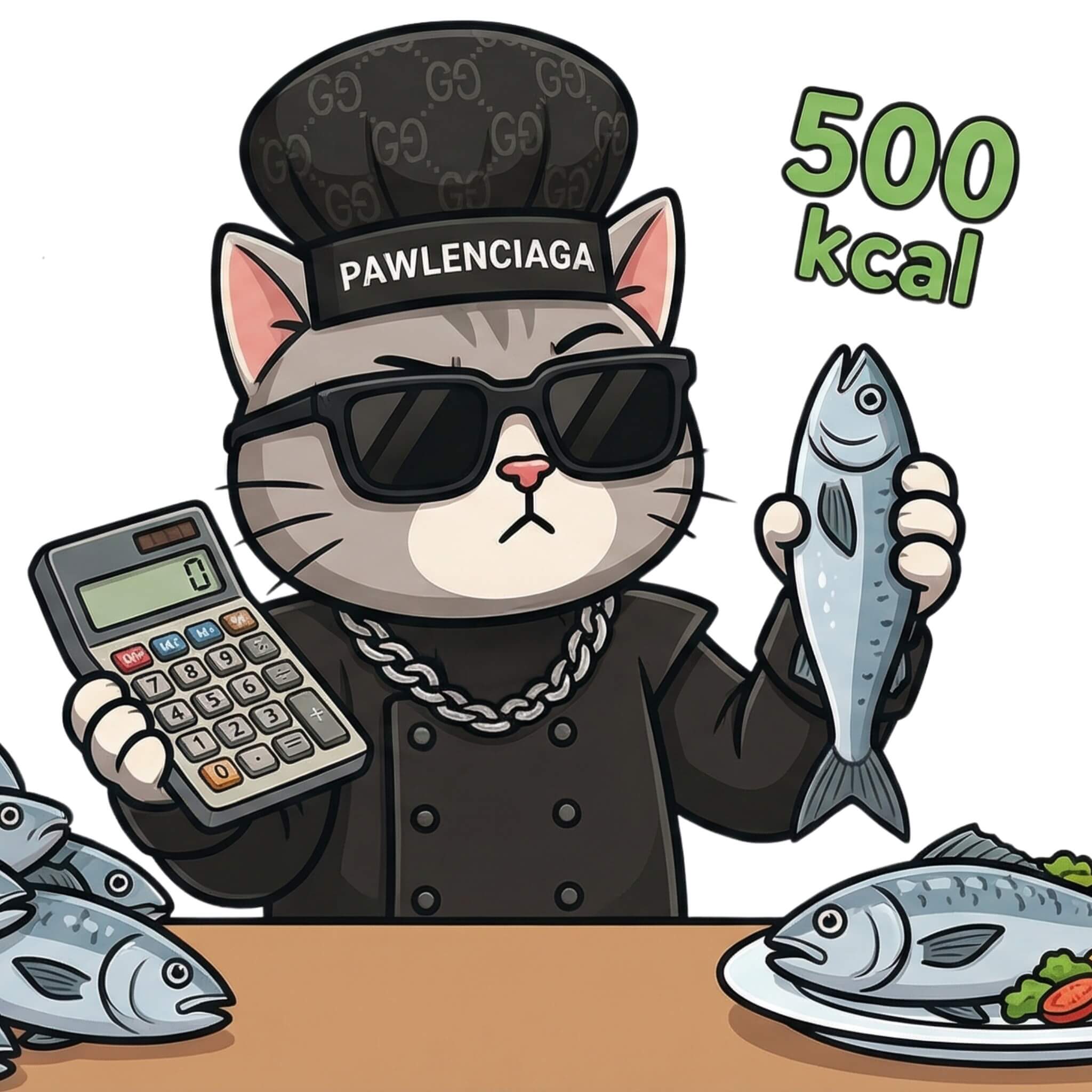

Daily Cat Food Portions by Weight, Age & Food Type
The right amount of cat food is not one universal scoop, one random can, or whatever fits in the bowl. It depends on your cat’s weight, body condition, age, activity level, health, reproductive status, and the calories in the exact food you use.
This guide helps you build a practical cat feeding plan. You will learn how to estimate daily calories, compare wet food and dry food portions, split meals across the day, include treats correctly, and track whether the amount is actually working.
Quick Answer: How Much Food Does a Cat Need Per Day?
Most healthy adult cats need a measured daily calorie target, then the food amount should be calculated from the calories on the food label. Many indoor adult cats fall somewhere around 160 to 300 calories per day, but the correct number can be lower or higher depending on size, body condition, age, activity, pregnancy, nursing, neuter status, and health.
The safest method is simple: estimate daily calories, check calories per can, pouch, cup, or gram, divide that total across meals, count treats inside the total, and track weight over time.
Cat Feeding Chart by Weight: Daily Calories as a Starting Point

Use this chart as a starting estimate for healthy adult cats. It is not a prescription. Overweight cats should usually be fed based on a safe target weight plan from a veterinarian, not their current weight alone. Kittens, pregnant cats, nursing cats, senior cats, and cats with medical conditions may need a more specific plan.
| Cat weight | Typical daily calorie range | What it means |
|---|---|---|
| 3 kg / 6.6 lb | About 160 to 200 kcal/day | Small adult cat. Portions can look surprisingly small, especially with dry food. |
| 4 kg / 8.8 lb | About 190 to 240 kcal/day | Common adult cat range. Check body condition before increasing food. |
| 5 kg / 11 lb | About 220 to 280 kcal/day | Medium to larger cat. Activity level and body shape matter a lot here. |
| 6 kg / 13.2 lb | About 250 to 320 kcal/day | Large cat or overweight cat. Use ideal body condition, not begging, as the guide. |
| 7 kg / 15.4 lb | About 280 to 360 kcal/day | May be a naturally large cat or may be carrying excess weight. Check waist and ribs. |
| 8 kg / 17.6 lb | About 310 to 400 kcal/day | Needs careful body condition review. Do not assume bigger body means unlimited food. |
Better Than Guessing: Use a Cat Calorie Calculator
A chart gives a rough starting point. A calculator is better because it can account for weight, age, body condition, and activity level. Use the Cat Calorie Calculator first, then compare your cat’s shape with the Cat Weight Calculator.
How to Calculate How Much to Feed Your Cat

The cleanest way to feed your cat is to calculate food from calories, not from guesswork. The same bowl can hold very different calorie amounts depending on whether you use wet food, dry food, freeze-dried food, toppers, or treats.
Start here
Estimate your cat’s daily calorie target
Use your cat’s current weight, ideal weight, age, activity level, and body condition. For a quick starting point, use the Cat Calorie Calculator.
Read the label
Check calories per can, pouch, cup, or gram
Look for “kcal per can,” “kcal per pouch,” “kcal per cup,” or “kcal per kg.” This number matters more than the visual size of the portion.
Build the day
Divide the total across meals
If your cat needs 220 kcal per day and one can has 85 kcal, two cans provide 170 kcal. That leaves about 50 kcal for dry food, treats, or another measured portion.
Track the result
Adjust based on weight trend, not begging alone
If weight is stable and body condition is ideal, the plan is probably close. If your cat gains weight, daily calories may be too high. If your cat loses weight without a planned diet, call your vet.
How Much Wet Food vs Dry Food Should I Feed My Cat?

Wet food and dry food can both fit into a healthy feeding plan when the diet is complete, balanced, and appropriate for your cat. The portion sizes look different because the calorie density is different.
Wet food portions
- Usually contains more moisture.
- Often provides fewer calories per gram than dry food.
- Can make the bowl look fuller for the same calorie target.
- Useful for cats who benefit from more dietary moisture.
Dry food portions
- Usually more calorie-dense.
- Easy to overfeed with loose scoops.
- Works well in puzzle feeders.
- Best measured by gram for accuracy.
| Daily target | Wet food example | Dry food example | Mixed feeding example |
|---|---|---|---|
| 200 kcal/day | Two 85 kcal cans plus 30 kcal extra | Half cup if food is 400 kcal/cup | One 85 kcal can plus 115 kcal dry food |
| 240 kcal/day | Two 100 kcal pouches plus 40 kcal extra | 0.6 cup if food is 400 kcal/cup | One 100 kcal pouch plus 140 kcal dry food |
| 280 kcal/day | Three 85 kcal cans plus 25 kcal extra | 0.7 cup if food is 400 kcal/cup | Two 85 kcal cans plus 110 kcal dry food |
Important: these are math examples, not brand-specific feeding instructions. Always check the calorie content of your exact food.
How Much to Feed a Cat by Age and Life Stage

Age matters because kittens, adults, seniors, pregnant cats, and nursing cats do not all have the same nutritional needs. Choose food labeled for the correct life stage, then adjust the amount based on calories, weight trend, and body condition.
Growth needs more frequent meals
Kittens need kitten-appropriate food and more frequent meals. Adult maintenance portions are not the right guide for a growing kitten.
Maintenance means stable condition
Adult cats usually need measured meals that keep weight and body condition stable. Indoor cats often need careful portion control.
Watch weight and muscle
Older cats should be monitored for weight change, muscle loss, appetite shifts, dental pain, and medical issues. Sudden changes are vet questions.
Do not crash diet
Rapid weight loss can be dangerous for cats. Weight-loss plans should be gradual and ideally guided by your veterinarian.
Needs change during pregnancy
Pregnancy can increase energy needs, especially later in pregnancy. Use veterinary guidance and a food suitable for the life stage.
Lactation can require much more food
Nursing cats can need much more energy while producing milk. This is not the time for random restriction.
How Many Times a Day Should I Feed My Cat?

Many adult cats do well with two to four measured meals per day. The total daily calories matter most, but meal timing can help reduce begging, fast eating, food anxiety, and midnight negotiations with a tiny fur criminal.
Measured meals
- Easier to track daily calories.
- Better for multi-cat homes.
- Helps you notice appetite changes.
- Useful for cats who gain weight easily.
Free-feeding
- Can work for some cats.
- Makes calorie tracking harder.
- Can hide food stealing.
- Can lead to gradual weight gain.
Do Cat Treats Count in Daily Food Portions?

Yes. Treats count. Toppers count. Human food snacks count. Tiny bites count, even when your cat acts like the laws of mathematics do not apply to tuna.
A practical rule is to keep treats as a small part of daily calories, often under 10% of the total. If your cat needs 220 kcal per day, that means treat calories should stay limited and the main meals should still provide complete and balanced nutrition.
| Daily target | Approximate treat limit | Main lesson |
|---|---|---|
| 180 kcal/day | Up to about 18 kcal | A few small treats can already be enough. |
| 220 kcal/day | Up to about 22 kcal | Large treats can quietly replace real food calories. |
| 280 kcal/day | Up to about 28 kcal | Still not a free snack buffet. |
How to Know If You Are Feeding Too Much or Too Little

The best feeding amount is the one that keeps your cat at a healthy body condition. Do not judge by begging alone. Some cats beg while gaining weight. Some sick cats eat more while losing weight. The scale and body condition are more useful than the drama.
Signs you may be overfeeding
- Weight is increasing over time.
- Ribs are hard to feel under fat.
- Waist is disappearing from above.
- Belly fat pad is getting larger.
- Food is refilled without measuring.
Signs to call your vet
- Your cat eats more but loses weight.
- Your cat suddenly refuses food.
- There is vomiting, diarrhea, or weakness.
- Your cat drinks or pees more than usual.
- Senior cat appetite changes suddenly.
Use Weight Trend With Body Condition
Use the Cat Weight Calculator to check your cat’s current condition, then track weight weekly if your cat tolerates it. If weight changes without a clear reason, involve your vet.
Multi-Cat Homes: Feed Each Cat, Not the Loudest Cat

If you have more than one cat, group feeding can trick you. One cat may be gaining weight while another is slowly losing it. One may eat fast, steal food, guard the bowl, or push the quieter cat away.
Feed in different spots
Separate feeding makes it easier to see who actually ate what.
Weigh cats individually
Do not rely on one shared food bowl to judge the whole household.
Use timed or microchip feeders
These can help when one cat steals food or needs a different diet.
Best Cat Feeding Setup: Stainless Steel Bowls and Neoprene Feeding Mats

A feeding plan is easier when the setup is clean, consistent, and easy to read. A stable bowl, measured portions, and a defined feeding area help you notice whether your cat is eating normally, leaving food behind, drinking more, pushing food around, or trying to inspect the kitchen like a tax auditor with whiskers.
Stainless steel bowls are a practical everyday choice because they are durable, easy to wash, and less likely to hold scratches compared with plastic. Neoprene feeding mats help define the feeding area, catch crumbs and splashes, and make cleanup easier.
Use clean stainless steel bowls
Choose bowls that are easy to wash and stable enough for daily wet food, dry food, or water routines.
Add a neoprene feeding mat
A feeding mat catches crumbs, water splashes, and pushed-out food, so the feeding area stays easier to clean.
Keep portions consistent
Use the same feeding area, measure meals, and watch changes over time.
Related Cat Feeding Calculators

These tools help turn a rough feeding question into a clearer next step.
How Much Should I Feed My Cat? FAQs

How many times a day should I feed my cat?
Many adult cats do well with two to four measured meals per day. Kittens usually need more frequent meals. The total daily calories matter most, but meal timing can help with begging, fast eating, and routine.
How much dry food should I feed my cat?
Check calories per cup or gram on the bag, then divide your cat’s daily calorie target by that number. Dry food is calorie-dense, so weighing it is more accurate than using a loose scoop.
How much wet food should I feed my cat?
Check calories per can or pouch. If a can has 85 kcal and your cat needs 220 kcal per day, one can leaves 135 kcal for another wet portion, dry food, or a vet-approved feeding plan.
Is wet food better than dry food for cats?
Wet food provides more moisture and can be useful for many cats, but the best choice depends on your cat’s health, preferences, budget, and veterinary advice. Many cats eat a measured mix of wet and dry food.
Should I free-feed my cat?
Free-feeding can work for some cats, but it makes calories harder to track and can be risky in multi-cat homes. Measured meals make weight changes, appetite changes, and food stealing easier to spot.
Can I feed my cat salmon, tuna, or chicken?
Plain cooked fish or chicken can be a small treat or topper if your cat tolerates it, but it should not replace complete and balanced cat food. Avoid bones, seasoning, garlic, onion, sauces, and frequent tuna-heavy feeding unless your vet recommends it.
How do I know if I am overfeeding my cat?
Weight gain, loss of waist, ribs becoming hard to feel, and constant bowl refills are common clues. Use the Cat Weight Calculator, track food calories, and ask your vet for an ideal weight target.
How do I calculate my cat’s daily calories?
Start with your cat’s weight, body condition, age, and activity level. Use the Cat Calorie Calculator for a starting estimate, then adjust based on weight trend and veterinary guidance.
How much should I feed an overweight cat?
An overweight cat should usually be fed based on a safe target weight plan, not the current weight alone. Do not crash diet a cat. Ask your vet for a gradual weight-loss plan.
Why is my cat still hungry after eating?
Your cat may be begging from habit, boredom, fast eating, food competition, or low meal satisfaction. If hunger comes with weight loss, vomiting, diarrhea, thirst, or sudden behavior change, contact your vet.
How This Cat Feeding Guide Was Built
This Cat School guide was written to help cat owners estimate feeding amounts more safely by combining calorie labels, body condition, life stage, meal timing, treat limits, and veterinary warning signs. It is not a replacement for a veterinary nutrition plan, especially for kittens, senior cats, overweight cats, pregnant or nursing cats, and cats with medical conditions.
Last updated: June 2026. Review your cat’s feeding plan with a licensed veterinarian if weight, appetite, thirst, urination, stool, vomiting, energy, or behavior changes suddenly.
Sources and Further Reading
- WSAVA - Cat Body Condition Score
- Cornell Feline Health Center - Feeding Your Cat
- Cornell Feline Health Center - How Often Should You Feed Your Cat?
- VCA Hospitals - Nutrition: General Feeding Guidelines for Cats
- VCA Hospitals - Feeding Times and Frequency for Your Cat
- VCA Hospitals - Dry, Canned, or Semi-Moist Food Choices for Cats
- Merck Veterinary Manual - Proper Nutrition for Cats
- Merck Veterinary Manual - Feeding Practices in Small Animals


