

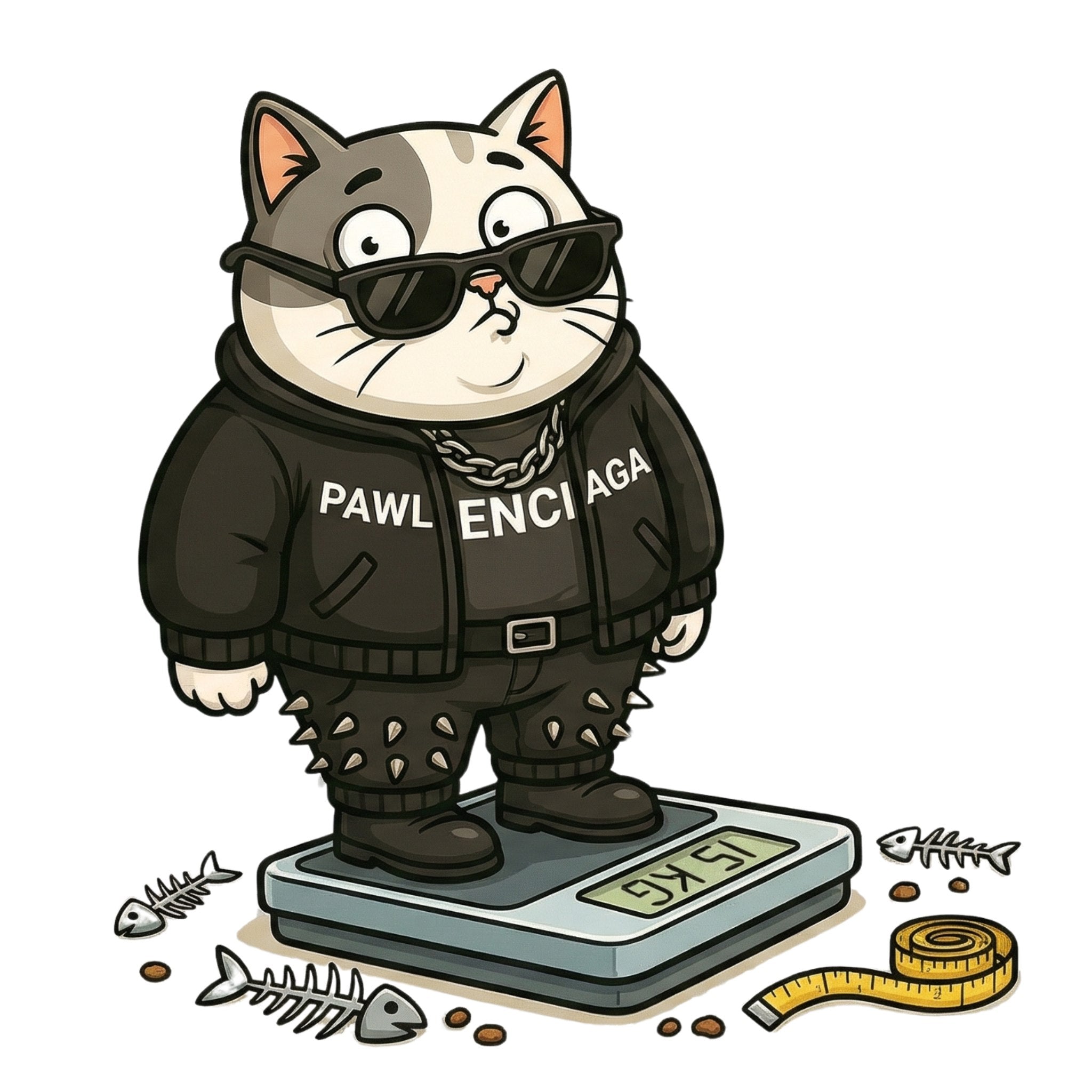

How to Help an Overweight Indoor Cat Lose Weight Safely
Helping an overweight indoor cat lose weight safely is not about sharply cutting food and hoping the number drops fast. In cats, the smarter target is controlled, steady progress: better body condition, easier movement, more comfortable grooming, better play tolerance, and a healthier long-term trend on repeat weigh-ins. A strong feline weight-loss plan is measured, practical, and consistent.
This guide explains how to tell whether a cat is truly overweight or simply larger-framed, why indoor cats gain weight so easily, why rapid weight loss is dangerous, how to structure feeding properly, which activities actually help, how to manage weight loss in multi-cat homes, and how to track progress without guesswork. Before starting, check your baseline with the Cat Weight Calculator and use the Cat Calorie Calculator to estimate a more practical daily calorie target.
⚠️ Important: cats must not be crash dieted. A cat that suddenly eats far less, stops eating, becomes lethargic, or loses weight too quickly needs veterinary attention. The goal is never starvation. The goal is a structured, safer calorie deficit with monitoring.
🧭 What You’ll Learn
- How to tell whether your cat is overweight or just naturally bigger
- Why indoor cats gain weight so easily
- Why rapid weight loss is risky in cats
- How to set up feeding for safe feline fat loss
- Which games and enrichment ideas actually work
- How to handle food in multi-cat households
- What mistakes stall progress
- How to track results week by week

👀 Is Your Cat Overweight or Just Big-Framed?
This is the first question that really matters. Some cats are naturally denser, broader, or heavier than others. A big-framed cat should not be judged against the same expectation as a smaller, finer-boned cat. Breed, sex, body frame, muscle, coat volume, and life stage all affect what “normal” looks like. That is why one generic average weight is not enough.
The strongest approach is to combine body shape with weight history and calculator context. An overweight cat usually has a less visible waist from above, a rounder body through the middle, and ribs that are harder to feel under a thicker fat covering. A naturally larger cat can still have an obvious waist, palpable ribs, normal agility, and a stable long-term weight trend.
🔺 Signs your cat may be above a healthy range
- Ribs are difficult to feel under fat cover
- The waist is less defined from above
- The belly looks broader, heavier, or more pendulous
- Grooming becomes less complete
- Your cat tires faster or seems less playful
- Repeat weigh-ins show a steady upward trend
✅ Signs your cat may simply be large-framed
- Ribs are still easy to feel with light fat covering
- A waist is still visible behind the ribs
- Your cat jumps, grooms, and moves comfortably
- The number on the scale is stable over time
- Breed or body type naturally runs larger
- The cat looks solid, not soft and rounded
For a more useful starting point than visual guessing alone, compare your cat’s current reading with the Cat Weight Calculator.

🏠 Why Indoor Cats Gain Weight So Easily
Indoor cats often live safer lives, but they also burn fewer calories in routine daily movement. They do not need to roam far for food, patrol outdoor territory, or spend as much energy exploring large spaces. Add easy access to food, boredom, treat habits, and low environmental stimulation, and extra weight can build quietly over time.
🍽️ Easy calories
Free feeding, extra treats, and loose portioning make it very easy for an indoor cat to eat more than needed every day.
😴 Low activity
Many indoor cats move less than owners assume, especially if there is little climbing, chasing, foraging, or play built into the day.
🧸 Boredom eating
Some cats start treating food as entertainment. If eating becomes the most rewarding event in the room, body fat can build surprisingly fast.
Common reasons indoor cats gain excess weight
- Free feeding with no real portion control
- Dry food served loosely “by eye”
- Too many lickable treats and small extras
- No calorie rethink after neutering
- Little daily enrichment or prey-style play
- Food always served in one easy bowl in one easy place
- Multiple people feeding the same cat

⚠️ Why Fast Weight Loss Is Dangerous in Cats
This is one of the most important warnings in feline weight management. In cats, aggressive food restriction is not a smart shortcut. Rapid weight loss and poor food intake can put a cat at risk of serious complications, including fatty liver syndrome. Safe cat weight loss is gradual, planned, and monitored.
🚫 What not to do
- Do not slash food dramatically overnight
- Do not let your cat “just be hungry for a while”
- Do not skip meals to force faster progress
- Do not try crash-diet logic on a cat
- Do not ignore a cat that suddenly eats much less
Safe progress usually looks boring. That is actually a strength. The best plans are consistent enough to follow for weeks, not extreme enough to create a new problem after a few days.

🍽️ How to Set Up Feeding for Safe Weight Loss
The most effective feeding plans are structured, measurable, and consistent. Guessing is where many owners lose control of the process. If you do not know how much food your cat is actually getting in a day, including treats and extras, you do not yet have a real weight-loss plan.
📏 Measure portions
Pre-measure the full daily food amount. Dry food is especially easy to overpour, so precision matters more than most owners expect.
🧮 Count the extras
Lickable treats, dental snacks, pill pockets, bits of meat, and “tiny rewards” still count toward the daily calorie total.
🕒 Split meals
Multiple smaller meals usually work better than one or two large servings, especially for food-focused indoor cats.
What usually works best
- Use the Cat Weight Calculator for weight context
- Use the Cat Calorie Calculator for calorie direction
- Measure the full daily amount, not random servings
- Keep treats small, limited, and counted
- Split meals into smaller hunting-style opportunities
- Keep the whole household on one feeding plan
- Adjust slowly based on real weigh-ins, not impatience
🎯 Best Activities for Overweight Indoor Cats
Exercise helps, but feline weight loss is not about long cardio sessions. The best activities are the ones your cat will actually repeat. Most cats do better with short, prey-style movement bursts than one big exhausting “workout.”
🪶 Wand toy hunting
One of the strongest tools for indoor cats. It creates stalking, chasing, pouncing, turning, and short sprint bursts that feel natural instead of forced.
🧩 Puzzle feeders
These add movement, slow eating, and mental work at the exact moment when calories enter the body. That makes them unusually effective.
🔍 Food treasure hunts
Hiding measured meal portions around the home turns mealtime into low-level foraging and walking instead of passive bowl eating.
🪜 Vertical movement
Cat trees, low shelves, benches, and stable climbing routes increase daily movement without demanding intense athleticism.
🎾 Toy rotation
Many cats ignore toys that stay out constantly. Rotating a smaller set makes old toys feel new again and often restores curiosity.
🎓 Food-based trick training
Some cats enjoy target training, recalls, platform stepping, or short routes when rewards come from their measured daily intake.
💡 What actually works in real homes
The strongest setup is usually a combination: precise portions, two to five short play or forage sessions a day, a puzzle feeder for at least part of the food, and enough environmental variety that the cat has reasons to move between meals.
🎉 Fun Ideas That Make the Plan Less Boring
These are not replacements for portion control, but they make the same veterinary logic much easier to live with. The principle is simple: create more movement, more hunting, more exploration, and less effortless bowl access.
📦 Community-favorite enrichment ideas
- Amazon box obstacle course
- Living room kibble treasure hunt
- Paper bag patrol with hidden toys
- Cat tree feeding checkpoints
- Window “bird TV” followed by wand play
- Short staircase snack checkpoints in safe homes
🧠 Why these ideas help
- They slow down how quickly food is eaten
- They add extra steps and low-level movement
- They reduce boredom-driven eating
- They make indoor feeding feel more like hunting
- They give owners more than one tool besides “feed less”
🏠 Multi-Cat Homes: How to Help One Cat Lose Weight Without Breaking the Whole System
This is where many plans quietly fail. One cat needs to lose weight. Another is fine. A third steals food if nobody watches. In these homes, the problem is not only calories. The problem is access, stress, competition, and inconsistency.
What usually helps most
- Feed cats in separate rooms
- Use timed meals instead of all-day grazing
- Keep bowls well separated
- Use microchip feeders if food stealing is chronic
- Watch meals instead of assuming the right cat ate the right portion
- Pre-measure each cat’s daily food allowance separately
In many multi-cat homes, separate feeding is not just helpful. It is the thing that finally makes the weight-loss plan work.
❌ Common Mistakes That Stall Progress
🙈 “My cat is just fluffy”
Coat can mislead the eye. That is why body condition, waistline, rib feel, and repeat weigh-ins matter more than fluff.
🍗 “Treats are too small to matter”
Small extras add up quickly, especially when more than one person gives them.
🏃 “I’ll just make my cat exercise more”
Activity helps, but overfeeding usually beats exercise if portions stay uncontrolled.
📉 “Faster is better”
In cats, aggressive weight loss is not smarter. It is riskier.

🗓️ A Practical 4-Week Tracking Plan
The easiest way to stay sane is to treat this like a monthly system instead of a vague promise to “feed less.” The goal is to create useful data and a routine that is easy to repeat.
Week 1️⃣ — Set the baseline
Weigh your cat, take one top-view photo and one side-view photo, measure all meals, count all treats, and run both the Cat Weight Calculator and Cat Calorie Calculator.
Week 2️⃣ — Fix the feeding routine
Move to measured portions, smaller meals, fewer random extras, and at least one enrichment feeding strategy such as a puzzle feeder.
Week 3️⃣ — Add movement
Keep the food plan stable and add structured daily activity: wand toy sessions, food treasure hunts, climbing checkpoints, or short target games.
Week 4️⃣ — Reassess the trend
Re-weigh on the same scale, compare photos, check the waistline, note grooming comfort and energy, and only then decide whether the plan needs a small adjustment.
Weekly weigh-ins are usually more useful than daily checking. Trends matter much more than day-to-day noise.
🩺 When to Talk to a Vet
A cat weight-loss plan is a management tool, not a diagnosis. Veterinary input matters if your cat stops eating well, loses weight too quickly, vomits often, has diarrhea, becomes lethargic, struggles to move, or simply seems unwell. Medical problems can sit underneath body-weight changes, and a calculator should never override clinical signs.
📞 Call your vet sooner if your cat:
- Stops eating or eats far less than normal
- Loses weight unusually fast
- Seems weak, withdrawn, or dehydrated
- Vomits repeatedly or has ongoing diarrhea
- Shows obvious pain or mobility decline
- Has increased thirst, increased urination, or other illness signs
🔗 Best Next Steps
To turn this article into a practical plan, start with the tools that match this topic directly:
Together, these give a much stronger starting point than guessing from one number on the scale alone.
📚 Veterinary Sources
These are strong reference points for feline obesity, weight reduction, calorie control, feeding structure, and enrichment-based feeding:


