

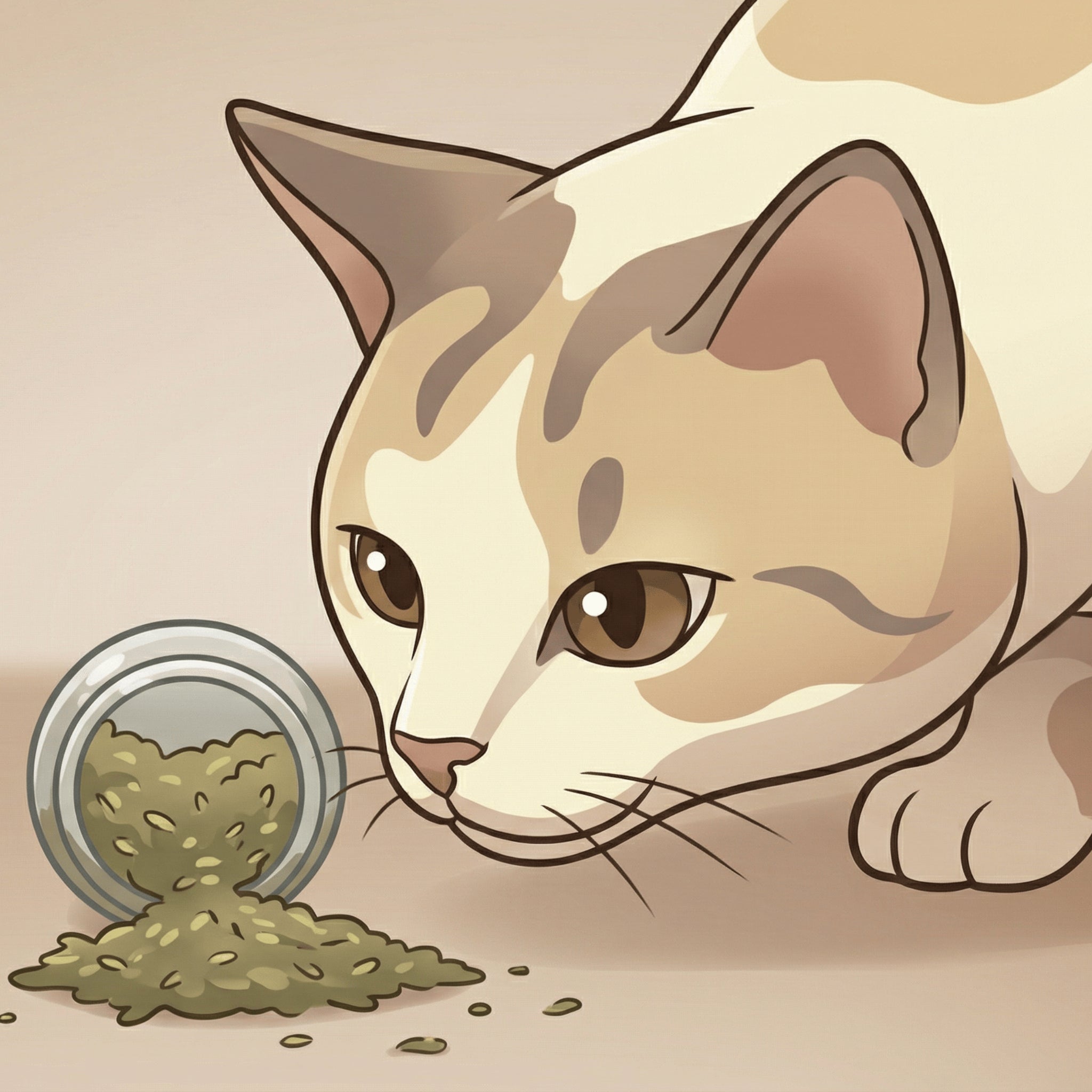
If you’ve ever watched your cat go from royal snoozer to full-blown breakdancer after a whiff of catnip, you’re not alone. Catnip is one of those weird, glorious mysteries of the feline world, and trust us, there's more to it than a few minutes of zoomies. So let’s break it all down: what catnip actually does to cats, when and how to give it, why it works, how much is too much, and whether other herbs can hold their ground against this leafy legend.

What Is Catnip, Really?
Catnip (Nepeta cataria) is a minty, leafy herb from the Lamiaceae family — aka the same gang as basil, oregano, and lavender. Native to Europe and Asia, it’s now growing wild across North America like a weed. But the real kicker? It contains a compound called nepetalactone, which triggers a euphoric, drug-like response in many cats.
When cats smell nepetalactone, it binds to receptors in their olfactory system and stimulates sensory neurons that affect mood and behavior — kind of like feline ecstasy. The response is hereditary, too. About 30–40% of cats don’t react at all, especially kittens and seniors. Most cats start responding between 3–6 months of age.
Common Catnip Reactions
So, what exactly happens when your cat gets a hit of the ‘nip?
- Rolling, flipping, and rubbing against the source
- Hyperactive play — zooming, pouncing, hunting invisible ghosts
- Meowing or growling (some go feral with joy)
- Drooling and licking the area
- Extreme chill — spaced out lounging or sedated loafing
These effects usually last about 5 to 15 minutes, after which the cat becomes temporarily immune to catnip’s charm. The refractory period can last a few hours. Then? Game on again.
How Much Catnip Should You Give a Cat?
More is not always better. A pinch (around 1/4 teaspoon) is enough for most cats. You can give it:
- Sprinkled on toys, scratching posts, or bedding
- Stuffed inside kicker toys or refillable plushies
- As dried leaves, fresh sprigs, or sprays
Too much catnip can cause overstimulation, vomiting, or diarrhea. If your cat looks dazed, aggressive, or sick, it’s time to ease off. Limit it to 2–3 times a week, max.
When Should You Give Catnip?
Timing matters. Catnip is a tool — use it smart:
- For playtime stimulation: Before interactive play sessions or when introducing new toys.
- To encourage use of furniture: Sprinkle on scratching posts or beds to redirect scratching or lounging habits.
- To ease anxiety: In safe zones during stressful events like vet visits, thunderstorms, or fireworks.
But avoid giving catnip right before bedtime or mealtimes if your cat turns into a parkour ninja. Also skip it before travel — it can cause either wildness or woozy sedation depending on the cat.
Is Catnip Safe? Side Effects & Warnings
For most cats, catnip is non-toxic and totally safe. It’s not addictive. They can’t overdose fatally — but they can make themselves sick if they ingest large amounts.
According to veterinary research, nepetalactone has no known long-term side effects in cats. But again, moderation is the magic word. Always observe how your cat reacts, especially the first few times.
Don’t Give Catnip To:
- Kittens under 3 months old — their brains don’t register it yet.
- Cats with seizures or neurological issues — some vets recommend avoiding all stimulants.
- Aggressive cats — it can heighten territorial or dominant behavior.
Science of Catnip: What Research Actually Says
Multiple studies confirm the behavioral effects of catnip. One key paper published in Science found that nepetalactone mimics pheromones, tricking the cat’s brain into reacting with a combination of excitement and chill. Another 2021 study out of Japan discovered that catnip also activates opioid receptors, which explains the weird euphoria some cats experience.
Fun fact: Rolling in catnip also provides mosquito repellent benefits. Yup, it’s not just fun — it’s functional. Cats in the wild may use it as a kind of insect armor.
Catnip vs. Silvervine vs. Valerian Root
Catnip has competition. Three other herbs show similar effects — and some cats actually prefer them:
Silvervine (Actinidia polygama)
A vine native to the mountainous regions of Japan and China. Contains actinidine and dihydroactinidiolide, both of which are more potent than nepetalactone for some cats. Up to 80% of cats react to silvervine — even those who don’t care about catnip.
Valerian Root
Known for its sedative effects in humans, it makes cats excited or goofy — similar to catnip. Has a strong smell that’s… not for the faint-hearted. Some cats love it. Others back away like you just peeled an onion in front of them.
Tatarian Honeysuckle
Less common, but effective. The woody sawdust or chips seem to trigger happy responses in some cats. It's a solid option for catnip non-responders.
Bottom line: Not every cat is a catnip junkie. If yours is indifferent, try silvervine or valerian before writing off herbal highs altogether.
Best Ways To Use Catnip
Here’s how to work it into your cat’s kingdom without causing chaos:
- Training: Use catnip to reinforce scratching posts, carriers, or new furniture.
- Exercise: Lazy cat? Toss a catnip toy during your cat’s sleepy slump hours. It's like an espresso shot for whiskers.
- Social bonding: Multiple cats? Catnip play can help reduce tension and spark mutual play. Or chaos. Supervise accordingly.
- Refill toys regularly: Dried catnip loses potency after a few months. Store in an airtight container away from light.
Should You Grow Catnip at Home?
Absolutely. It’s easy to grow indoors or outdoors in pots. Fresh leaves are often more effective than store-bought dried bags, which can lose kick if they sit on a shelf too long. Just remember: your cat will find the plant. Fence it off if you want to harvest before it gets annihilated.
When NOT to Give Catnip
There are a few “hold the nip” moments:
- Before vet visits: You want a calm cat, not a raging raver.
- In multi-cat households with conflict: If they get aggressive on catnip, it’s a hard no.
- Right before meals: Catnip might kill their appetite.
Also don’t mix catnip with calming supplements unless your vet approves — the combo could be counterproductive.
How Often Should You Give Catnip?
Think of it like dessert. Not every day, but a few times a week is fine for most cats. If your cat starts ignoring it, take a break. Sensitivity can dull with overuse.
Final Thoughts: Is Catnip Worth It?
For most cats, catnip is an easy, affordable way to encourage play, reduce stress, and reinforce good habits — without side effects. It’s not magic, but it’s pretty close if used wisely.
And if it doesn’t work? Your cat’s not broken — just part of the chill 30% club. Try silvervine or valerian root instead. Same party. Different herb.
The Catnip Cheat Sheet
- Safe: Yes, for most adult cats. Kittens won’t respond.
- Not addictive: Confirmed.
- Effects: Euphoric, playful, sedated (depending on the cat).
- Dosage: 1/4 tsp dried, 1–2 times per week max.
- Other options: Silvervine, Valerian, Honeysuckle.
- Storage: Airtight, cool, dry. Toss expired bags.
Catnip is like nature’s cheat code for bored cats — just remember it’s a treat, not a lifestyle. Use it smart, respect your cat’s limits, and always be ready to hit pause if they go full feline rave mode.


