

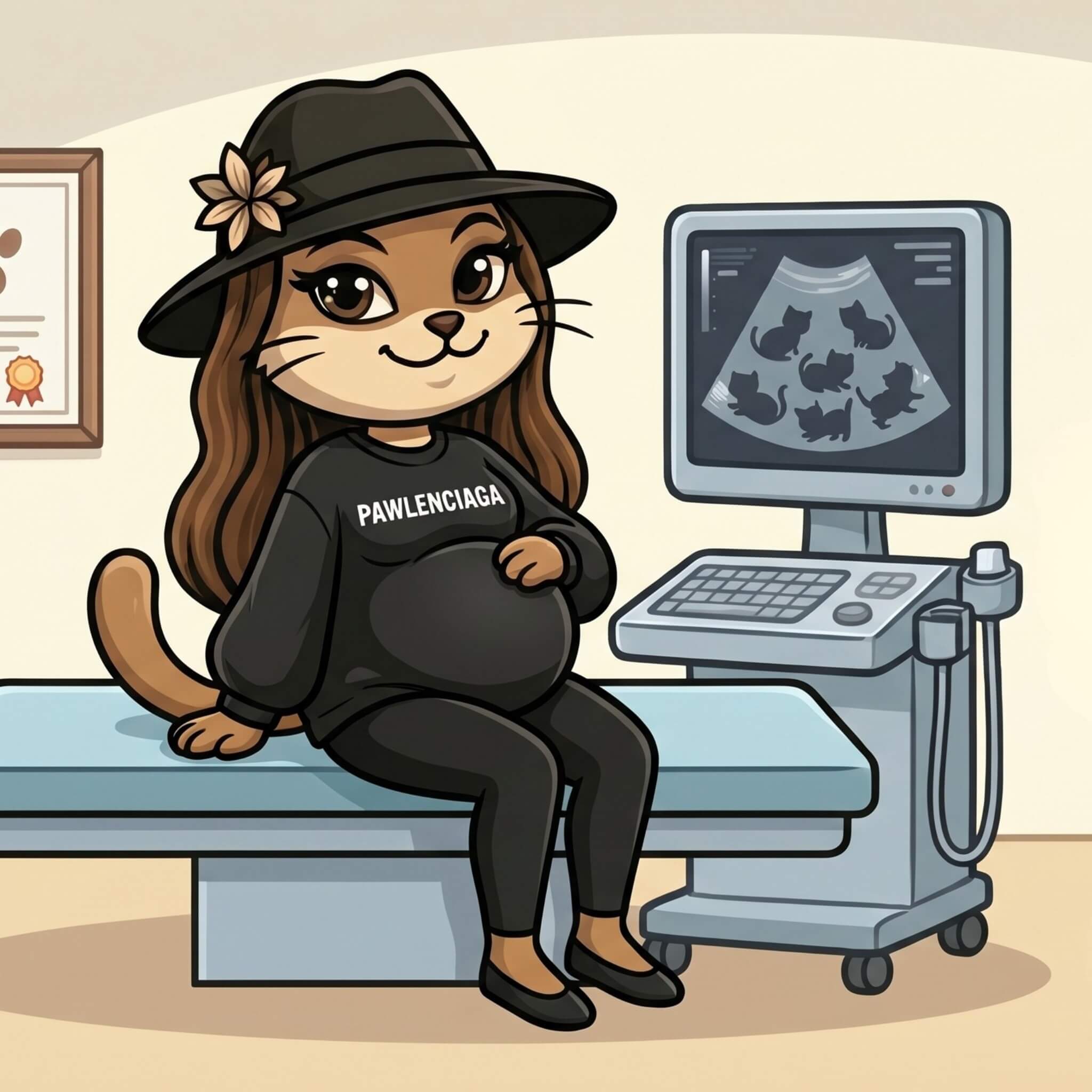

How Long Are Cats Pregnant? Cat Pregnancy Timeline Week by Week
Cats are usually pregnant for about 63 to 65 days, which is roughly 9 weeks. Some pregnancies can be a little shorter or longer, so the best way to understand cat pregnancy is as a timeline: early signs, visible body changes, due-date planning, nesting, and labor preparation.
If you are asking how long are cats pregnant, how many weeks are cats pregnant, or when will my cat give birth, this guide gives you the week-by-week picture. You will learn what may happen from mating to birth, when a vet can confirm pregnancy, when to prepare a nesting box, and when warning signs need veterinary help.
Quick Answer: How Long Are Cats Pregnant?
Most cats are pregnant for about 63 to 65 days, or roughly 9 weeks. Many veterinary references describe a normal range around 60 to 67 days, with some variation depending on mating timing, ovulation timing, litter size, breed, and individual biology.
If you know the mating date, use the Cat Pregnancy Calculator to estimate the due date, birth window, current pregnancy week, ultrasound window, X-ray timing, and nesting-box prep date.
Cat Gestation Period: How Many Days Are Cats Pregnant?

The average cat gestation period is about 63 to 65 days. That means most cats give birth around 9 weeks after mating. Because cats are induced ovulators and mating can happen more than once, the exact due date can be difficult to know unless the mating window is clear.
A normal pregnancy can vary. Some veterinary references describe pregnancy around 60 to 67 days, while broader clinical ranges can extend slightly outside that. A very early birth, prolonged pregnancy, weakness, abnormal discharge, or labor that does not progress should be treated as a veterinary concern.
| Question | Practical answer | What to do |
|---|---|---|
| How long are cats pregnant? | Usually about 63 to 65 days. | Use the mating date to estimate the due date. |
| How many weeks are cats pregnant? | About 9 weeks. | Track pregnancy by week, not just by signs. |
| Can the due date vary? | Yes, because mating and ovulation timing can vary. | Use a birth window rather than one exact day. |
| When should I prepare? | Start serious birth prep around week 8. | Prepare a quiet nesting area before labor signs begin. |
Cat Pregnancy Due Date Calculator: Estimate the Birth Window

If you know when your cat mated, a calculator is the fastest way to turn dates into a useful plan. The Cat Pregnancy Calculator estimates the due date, birth window, current pregnancy week, trimester, ultrasound timing, X-ray timing, and when to prepare the nesting box.
First and last mating dates
Use the first known mating date, last known mating date, or a date range if mating happened more than once.
Due date and birth window
The result should be treated as an estimate, not a guaranteed delivery appointment.
Milestones by week
Use the timeline to plan vet confirmation, nutrition, nesting, and labor monitoring.
What If You Don’t Know the Mating Date?
If you do not know the mating date, do not guess too confidently. Many owners notice pregnancy only after appetite changes, belly rounding, or nesting behavior begins. Without a mating date, the safest path is to combine visible signs with veterinary confirmation.
Use home clues carefully
- Pinking up can appear around week 3.
- Belly rounding often becomes clearer around weeks 4 to 6.
- Kitten movement is usually a late-pregnancy clue.
- Nesting often appears in the final 1 to 2 weeks.
Use veterinary timing
- Ultrasound may help confirm pregnancy during early to mid stages.
- X-ray is more useful later for kitten counting.
- Your vet can help estimate stage when dates are unclear.
- A due-date range is safer than one exact date.
Cat Pregnancy Timeline Week by Week

This is the core cat pregnancy week by week timeline. Every cat is different, so use it as a guide rather than a strict checklist. Some signs appear earlier, some later, and some are easy to miss.
Week 1 · Days 1-7
Mating, ovulation, and fertilization
In the first week, there may be no visible pregnancy signs. Cats are induced ovulators, meaning mating can trigger ovulation. After successful mating and fertilization, the pregnancy process begins, but there is usually very little for an owner to see at home.
Week 2 · Days 8-14
Early embryo development, still few visible signs
Week 2 is usually still quiet from the outside. Your cat may act normal, sleep slightly more, or show mild behavior changes. These signs are not enough to confirm pregnancy because stress, heat cycles, illness, and routine changes can look similar.
Week 3 · Days 15-21
Early pregnancy signs may begin

Around week 3, some cats show “pinking up,” where the nipples become pinker, slightly larger, and easier to notice. This is one of the earliest useful signs that a cat may be pregnant. Heat behaviors may also stop after successful mating.
Week 4 · Days 22-28
Vet confirmation becomes more realistic

By week 4, pregnancy may be easier for a veterinarian to confirm. Ultrasound is commonly useful from around this stage, and it can help assess pregnancy and fetal viability. At home, belly changes may still be subtle.
Week 5 · Days 29-35
Belly rounding and appetite changes become clearer
During week 5, many cats begin to show a more noticeable lower belly. Appetite may increase as the kittens grow. Weight gain should be gradual, not sudden or paired with weakness.
Week 6 · Days 36-42
Mid-pregnancy body changes are obvious
By week 6, the abdomen is usually more rounded, mammary development may be more noticeable, and appetite may continue to rise. Many queens need more nutrient-dense food during this period.
Week 7 · Days 43-49
Late pregnancy begins and X-ray timing approaches
From around week 7 onward, pregnancy is usually visible. Depending on timing, your vet may discuss X-ray later in pregnancy to help count kittens once fetal skeletons are visible. This can be helpful for delivery planning.
Week 8 · Days 50-56
Nesting preparation should begin

Week 8 is the time to prepare seriously. Your cat may begin searching for quiet places, closets, drawers, laundry baskets, or hidden corners. She may also spend more time resting and grooming.
Week 9 · Days 57-65+
Labor signs and birth window
During week 9, labor may happen at any time within the expected window. Signs can include stronger nesting, restlessness, more grooming, reduced appetite, hiding, vocalizing, and clear watery discharge. Some cats become clingy, while others want privacy.
Cat Pregnancy Stages: Early, Mid and Late Pregnancy
Another way to understand the cat pregnancy timeline is to divide it into three stages. This helps you know what to watch for and what to prepare next.
Early pregnancy
Signs may be subtle. Watch for stopped heat cycles, mild behavior changes, more sleeping, and pinking up around days 15 to 20.
Mid pregnancy
Belly rounding, increased appetite, steady weight gain, and mammary changes become more noticeable. Vet confirmation is more realistic.
Late pregnancy
The abdomen is larger, kitten movement may be visible, nesting begins, and labor signs approach.
When Can a Vet Confirm Cat Pregnancy?
Home signs are useful, but a veterinarian is the best way to confirm pregnancy. Confirmation timing depends on the method used and how far along the cat is.
| Method | Typical timing | What it helps with |
|---|---|---|
| Veterinary exam | Around day 21 to 30 in some cases | Can assess health and pregnancy possibility. |
| Ultrasound | Often useful around 25 to 35 days | Can confirm pregnancy and assess fetal viability. |
| X-ray | Later pregnancy, once fetal skeletons are visible | Can help estimate kitten count for delivery planning. |
When Will My Cat Give Birth? Signs Labor Is Close

Near the end of the pregnant cat timeline, signs of labor become more important than general pregnancy signs. Stage I labor in queens can involve restlessness, nesting, appetite change, and stronger uterine activity before visible abdominal straining begins.
Labor may be close
- Strong nesting behavior
- Restlessness or hiding
- Reduced appetite
- More grooming of belly or genital area
- Clear watery discharge
- Visible contractions later in labor
Call a vet urgently
- Stage I labor signs continue beyond 24 hours
- Strong contractions continue without a kitten
- More than 1 to 4 hours pass between kittens during active delivery
- Green, dark, bloody, or foul discharge appears before the first kitten
- Weakness, collapse, heavy panting, or severe distress appears
This section is only a quick overview. A separate article on cat labor signs can go deeper into normal delivery, kitten intervals, and emergency warning signs.
What to Prepare Before Your Cat Gives Birth

Birth preparation should start before the first signs of labor. By week 8, create a calm space where your cat can feel safe. Some cats will use the box you prepare. Others will still try to choose the laundry basket like a tiny real-estate investor with opinions.
Quiet, warm, and private
Use a clean box with low sides, soft towels, and enough room for the queen to turn around comfortably.
Food, water, and litter nearby
Keep essentials close, but not directly inside the nesting box. She should not need to travel far.
Vet contact ready
Save your vet’s number and the nearest emergency clinic before week 9, not after panic starts.
Feeding a Pregnant Cat During the 9-Week Timeline

Pregnancy changes energy needs. Some queens eat less for a short period early on, then need more calories and more nutrient-dense food later. Your vet may recommend a kitten food or pregnancy-appropriate formula, especially as pregnancy advances and lactation approaches.
The Cat Calorie Calculator can help you understand a baseline adult maintenance estimate, but pregnancy and nursing often require a different feeding plan. Use it only as a planning reference, then confirm the actual pregnancy diet with your veterinarian. The Cat Weight Calculator can help with general body-condition awareness, but pregnancy weight gain should be reviewed carefully.
When to Call a Vet During Cat Pregnancy

Most cat pregnancies progress normally, but waiting too long can be dangerous when something is wrong. Call your veterinarian if your pregnant cat seems ill, weak, distressed, or if labor does not progress normally.
Call your vet soon
- Refuses food for more than 24 hours
- Repeated vomiting or diarrhea
- Weight loss during pregnancy
- Fever, weakness, or abnormal hiding
- Pain, swelling, or abnormal mammary discharge
Urgent signs
- Stage I labor appears to last more than 24 hours
- Strong contractions continue without a kitten
- More than 1 to 4 hours pass between kittens during active delivery
- Green, dark, bloody, or foul discharge appears before birth
- Collapse, severe distress, or heavy panting appears
How Long Are Cats Pregnant? FAQs

How long are cats pregnant?
Cats are usually pregnant for about 63 to 65 days, or roughly 9 weeks. The exact birth date can vary depending on mating timing, ovulation timing, litter size, and the individual cat.
How many weeks are cats pregnant?
Most cats are pregnant for about 9 weeks. A week-by-week timeline is useful because early pregnancy can be hard to see, while late pregnancy signs become much clearer.
Are cats pregnant for 2 months?
Yes, approximately. Cat pregnancy lasts around two months, but “9 weeks” is usually a more practical way to track the timeline.
How do I know what week pregnant my cat is?
The best estimate comes from the mating date. If you know the date or date range, use the Cat Pregnancy Calculator. If you do not know the mating date, a veterinarian can help estimate pregnancy stage with exam findings and imaging.
What if I do not know when my cat mated?
Use visible signs only as rough clues, then confirm with a veterinarian. Pinking up, belly rounding, kitten movement, and nesting can suggest a stage, but ultrasound or X-ray timing is more reliable.
Can cats have a false pregnancy?
Yes, false pregnancy can happen, although it is less common than real pregnancy after mating. A cat may show some pregnancy-like signs without carrying kittens. Veterinary confirmation is the safest way to know.
When can a vet confirm cat pregnancy?
A vet may be able to confirm pregnancy by exam or ultrasound during the early to mid stages. Ultrasound is commonly useful around 25 to 35 days, while X-ray is more useful later for kitten counting.
When should I prepare a nesting box?
Start preparing the nesting box around week 8, or about day 50 onward. Put it in a quiet, warm, private area with clean towels and easy access to food, water, and litter.
When will my cat give birth?
Most cats give birth around days 63 to 65 after mating, but the safest answer is a birth window, not one exact day. Use the Cat Pregnancy Calculator for an estimate, then watch for nesting, restlessness, appetite changes, and labor signs.
What if my cat goes past her due date?
Because due dates are estimates, a small difference may not be abnormal. But if your cat seems distressed, weak, has abnormal discharge, or appears far past the expected birth window, contact your veterinarian.
How This Cat Pregnancy Timeline Was Built
This Cat School guide was written to help cat owners understand cat pregnancy length, week-by-week changes, due-date planning, vet confirmation timing, and labor preparation. It uses veterinary references for gestation length, pregnancy confirmation, feeding, and labor warning signs.
Last updated: June 2026. Review your cat’s pregnancy timeline with a licensed veterinarian if timing is unclear, symptoms seem abnormal, or labor does not progress as expected.
Sources and Further Reading
- VCA Hospitals - Pregnancy and Parturition in Cats
- VCA Canada - Feeding the Pregnant Cat
- International Cat Care - Cat Pregnancy
- International Cat Care - Cat Birth
- Merck Veterinary Manual - Management of Reproduction of Cats
- Merck Veterinary Manual - Labor, Delivery, and Postpartum Care in Queens
- MSD Veterinary Manual - Breeding Management of Queens


