

331 Japanese names in the family registry
Japanese Cat Names
What is a good Japanese name for my cat?
Looking for a Japanese name for your cat? These are 109 of our favorites from the 331 names in the Mad Cat Cartel name book with Japanese roots, from classics like Momo, Sora and Yuki to food, kawaii words and gods of thunder and wind.
Every name comes with what it means and the kind of cat it suits. Tap Pick a name for your cat and the Cartel chooses one for you.
109 on this page7 name groups4,861 in the generator
Updated · By Mad Cat Cartel · How this list was made
Name
Mochi
Sex
Any cat
Style
Cute · Food
Origin
Japanese
Rarity
Common
Japanese mochi is a rice cake of steamed glutinous rice pounded until smooth and stretchy, and it is a traditional food of the Japanese New Year. Soft and squishy to say, the name suits a cuddly cat who relaxes in any lap and turns boneless when hugged.
The family's top 12
Each one with the note it got from the Cartel desk that approved it.
-
Cat ID · 01 · Common
Mochi
Japanese mochi is a rice cake of steamed glutinous rice pounded until smooth and stretchy, and it is a traditional food of the Japanese New Year. Soft and squishy to say, the name suits a cuddly cat who relaxes in any lap and turns boneless when hugged.
Memo from the desk of Meowchi "Chi" Everyone at the catalogue shoot kept asking which stylist had done Mochi's fur. Nobody had. Mochi simply wakes up camera-ready and naps like an off-duty model between takes. I told them the stylist was me, which was only half a lie.
 Chi
-
Cat ID · 02 · Common
Momo
In Japanese, momo means peach, and in one of Japan's best-loved folk tales the hero Momotaro is found inside a peach floating down a river. The sound is soft and sweet, and it calls up a gentle cat with a fuzzy, peach-soft face who melts into any lap on offer.
Memo from the desk of Meowchi "Chi" Toddlers and fashion editors pronounce it the same way, Momo, and that is how cute takes territory. The next capsule is built around you.
Chi -
Cat ID · 03 · Common
Yuki
Read as snow or as happiness depending on the characters, Yuki is a Japanese given name open to either sex. Either sense points to a cat with a quiet, contented temperament, one that settles as softly as fresh snow and lifts the mood of a house. It also opens longer names, Yukiko and Yukio among them, so it sounds familiar and serene.
Memo from the desk of Cargo Katsuki Snow is the one delay no dispatcher can argue with, yet nothing about a cat named Yuki ever runs late. When the snow starts, it will be at the window, logging every flake like freight on a manifest.
 C. Katsuki
-
Cat ID · 04 · Common
Sora
In Japanese, sora is the plain everyday word for sky, and parents choose it for girls as well as boys. That wide-open image fits a free-spirited cat who can sit at a window for hours, following birds and passing clouds as if charting the weather.
Memo from the desk of Cargo Katsuki Air freight is the fastest lane in my business and the hardest to predict. Sora has the name for it: never where you left it, always where it needs to be. One day Sora will touch down before the arrivals board has even updated.
C. Katsuki -
Cat ID · 05 · Common
Hana
Hana is Japanese for flower, a refined name that suggests a graceful cat who settles among the houseplants as if she belonged to the arrangement. Across Central Europe Hana is also the local form of Hannah and a top-twenty name for Slovak girls, so it sounds familiar far beyond Japan.
Memo from the desk of Miss Meowlin At embassy receptions, the faces reporters remember are the ones who never seem to try. Hana will represent our people at each of them this season, and I will stand a polite step behind her.
 Miss Meowlin
-
Cat ID · 06 · Common
Haru
Meaning spring, sun or clear weather, depending on the kanji, Haru is given to Japanese sons and daughters. Studio Ghibli fans know it as the schoolgirl of The Cat Returns, taken to the Cat Kingdom after saving a cat prince. Sunny through and through, it calls up a cat who wakes early and chirps at the birds from every window.
Memo from the desk of Meowchi "Chi" Haru calms any crisis at headquarters just by strolling past it. The sales staff now book their difficult calls for whenever Haru is in the room. On cloudy mornings, it parks beside the desk lamp as though the lamp were its private sun.
Chi -
Cat ID · 07 · Rare
Kuma
Bear in Japanese is kuma, and the word sits inside two famous mascots, Rilakkuma and Kumamon. The image is cuddly and comic, with some strength underneath. Laid-back cats that sit up on their haunches like teddies and put up with long hugs carry it best.
Memo from the desk of Meowchi "Chi" At each pop-up I run, the bear plush goes first and the handbags wait their turn. A kitten named Kuma has the same pull, and my security team now volunteers for babysitting duty. Merch never lies.
Chi -
Cat ID · 08 · Common
Neko
Neko is simply Japanese for cat, so the name is a wink, like calling a dog Dog. Cheeky and self-assured, it suits the cat who is pure cat, nosy about every bag and answering to its name only when it pleases. The word also lives in maneki-neko, the beckoning cat figurine that shops display for luck.
Memo from the desk of Meowchi "Chi" It gets introduced at each team meeting and still draws a laugh, which is more than my slides manage. Before long, every label in the building will be copying that plain approach.
Chi -
Cat ID · 09 · Legendary
Totoro
Totoro is the forest spirit of Hayao Miyazaki's My Neighbor Totoro, and the name settles on a calm cat, wide in the face, with the habit of dozing somewhere green. In the film it began as young Mei mispronouncing tororu, Japanese for troll, so a mythical forest creature is named as gently as a yawn.
Memo from the desk of KITTØ 9 Totoro is three soft beats, the kind of loop you could build a whole slow set around. When it yawns the tempo halves, and I would leave every syllable of the name alone.
KITTØ 9
-
Cat ID · 10 · Rare
Hoshi
Hoshi, the ordinary Japanese term for star, suits a nocturnal cat with eyes that glint like twin stars after dark. In Japanese police slang the word, often written in katakana, means the suspect, a wink of mystery in an otherwise starry, elegant name.
Memo from the desk of Cargo Katsuki It answers to the oldest guide on any route, the one sailors steered by long before tracking numbers. So Hoshi now runs my night dispatch desk, where every crew needs one fixed point it can trust.
C. Katsuki -
Cat ID · 11 · Rare
Miso
Miso, the Japanese paste of soybeans fermented with salt and koji, names the cosy cat that comes looking for company on cold evenings and lingers until the house feels warm. Households once made their own, and Japanese still calls self-praise temae miso, boasting about your own homemade batch.
Memo from the desk of Chef Paulie Gatto I have cooked under loud head chefs and quiet ones, and the quiet ones always outlast the rest. Miso works the quiet way and never needs to raise its voice to be obeyed. Soon every cook in the brigade will ask Miso's blessing before moving a pan.
 Paulie Gatto
-
Cat ID · 12 · Common
Tama
Japanese for ball or jewel, Tama goes to a cat who sleeps curled into a tight sphere and wakes to chase anything that rolls over the floorboards. It is also the family cat in the long-running cartoon Sazae-san, and it still made the top ten of a 2017 Japanese cat-name survey, a homely, everyday choice.
Memo from the desk of Cargo Katsuki If you ever ride the Kishigawa Line in Wakayama, you will end at Kishi, a station rebuilt as a cat's face because a station cat named Tama once wore the stationmaster's cap. Hand yours the front hall and a timetable, then count the visitors.
C. Katsuki
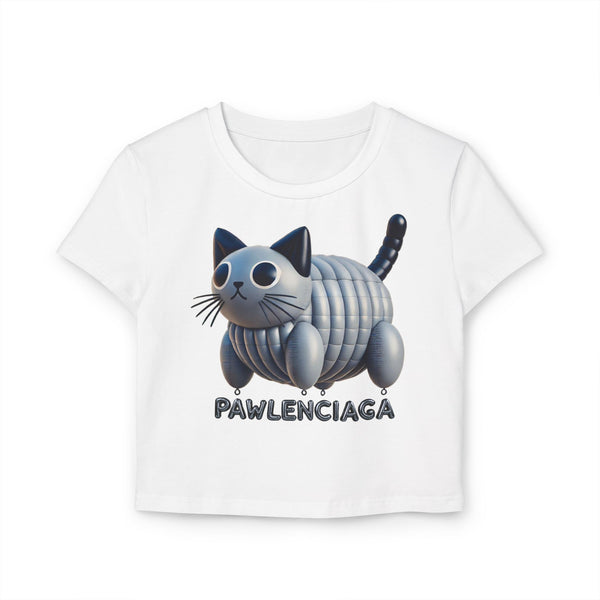
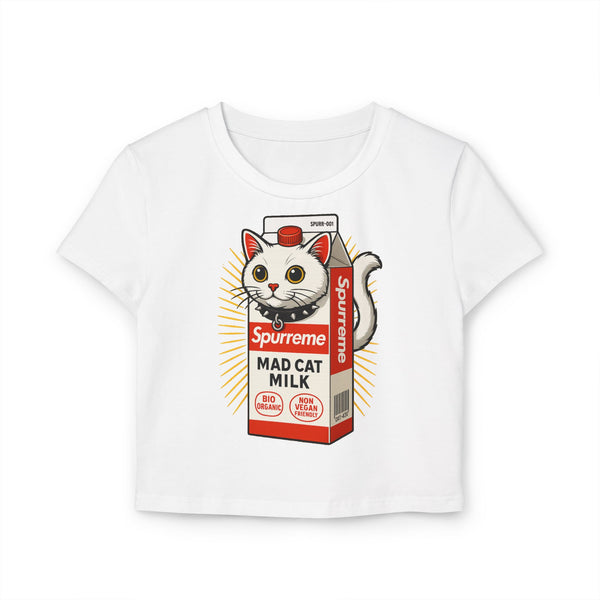
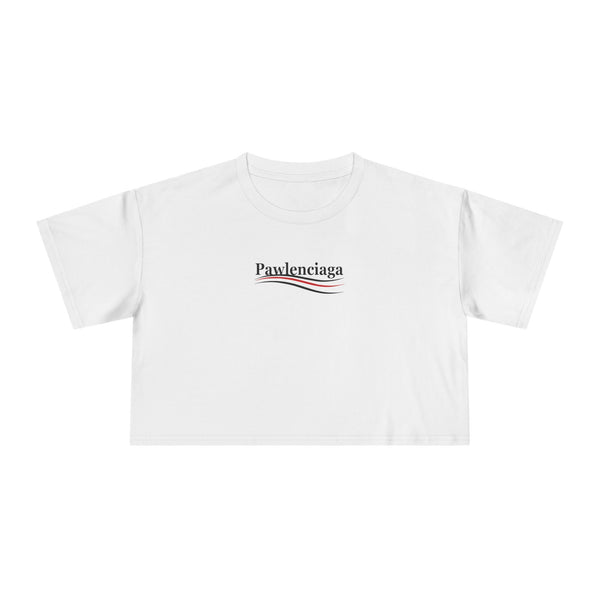
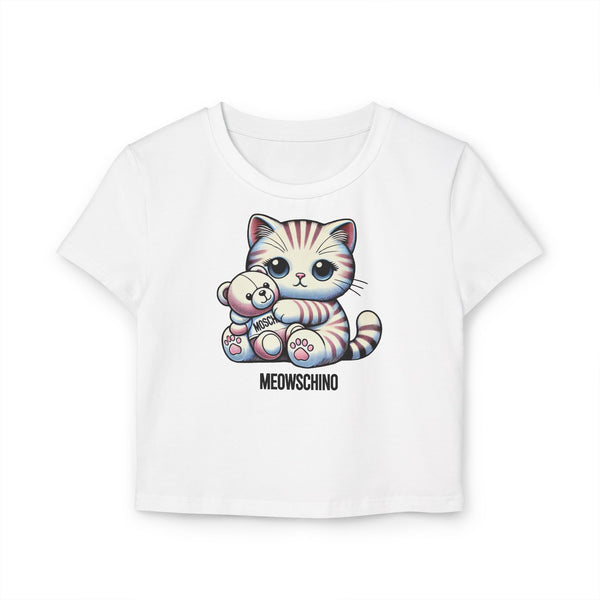
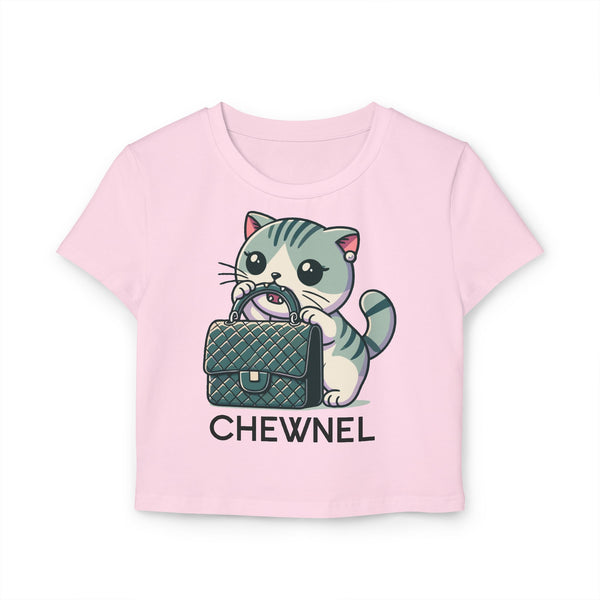
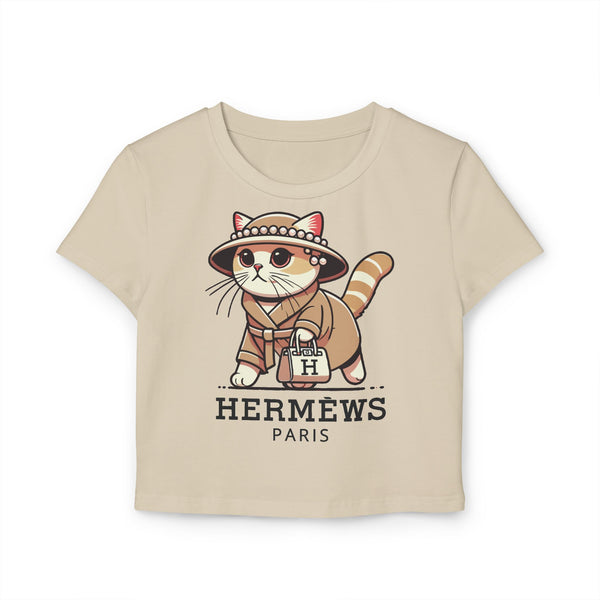
Named your cat? Dress the human.
Original cat parody designs from the Cartel, printed to order.

Group 01 · 22 names
Japanese names for girl cats
Names Japanese parents give their daughters, from flowers to clear skies.
- Aiko
- Written with the characters for love and child, Aiko is a Japanese girl's name carrying the warm sense of a much-loved daughter. Princess Aiko, daughter of Emperor Naruhito and Empress Masako, bears it, so it also carries a quiet royal polish. It calls for an affectionate cat who is in your arms the moment you sit down and settles in as if by right.
- Hina
- A chick or fledgling is hina in Japanese, a youthful word for a kitten who peeks past the curtains at every new sound. It also names the hina dolls, figures of the imperial court displayed for the Girls' Festival on 3 March. Written another way, Hina topped Japan's girls' names seven times in the Heisei era.
- Chika
- Chika can pair chi, thousand or wisdom, with ka, flower or good, so this Japanese name can read as a thousand flowers or as good sense. Expect a clever cat who learns the household routine within a week and then quietly improves on it.
- Kumi
- A Japanese girls' name, Kumi may pair the kanji for long-lasting and beauty, and as an everyday word it means group, team or school class. That sense of belonging fits a sociable cat who prefers company to quiet and is never far from the nearest gathering.
- Miku
- Miku carries hopeful Japanese readings such as beautiful sky and future, fitting for a cat who spends long mornings at the window studying the clouds. It ranked in Japan's girls' top ten through the 1990s and 2000s. Worldwide it is also known through Hatsune Miku, the virtual singer whose full name means the first sound of the future.
- Misaki
- Misaki is a popular feminine name in Japan, most often read as beautiful blossom, and as an ordinary word it also means a cape, the headland that juts into the sea. Soft to say and quietly poised, it belongs to the cat at the farthest windowsill, watching the street like a lookout.
- Miya
- Written in Japanese, Miya can take the character for shrine or palace, or characters for beauty and night. Short and soft, almost a miaow in itself, the name gives a regal note to a cat who chirps at every guest and expects a greeting back.
- Miyu
- Miyu combines Japanese characters such as beautiful with gentleness or with bond, and it is a current favourite for newborn daughters in Japan. The soft sound belongs to a gentle cat who climbs into laps uninvited and purrs at the first touch. Other spellings use characters for evening or fruit, so families can tune the meaning.
- Nami
- Nami, a feminine Japanese name frequently written with a character meaning beautiful and also the ordinary word for wave, suits a light-pawed cat that slips in and out of rooms like the tide. Manga fans know Nami as the navigator of the Straw Hat Pirates in One Piece, a sharp-witted thief known as Cat Burglar Nami.
- Nanae
- A cat who arrived like a stroke of good luck could hardly do better than Nanae, since one common spelling joins the characters for seven and blessing. Seven carries happy weight in Japan, home of the Seven Lucky Gods, so the name has a warm, auspicious ring. The novelist Nanae Aoyama and the manga artist Nanae Chrono both carry it.
- Reika
- Reika is a Japanese name for girls, often spelled with the characters for lovely and flower, though parents choose from several versions. Graceful and clear, it suits an elegant cat who moves through a crowded room without disturbing a single ornament.
- Riko
- Written 莉子, jasmine child, or 理子, child of reason, Riko has been a fixture of Japan's girls' top forty for years. Clever and neat, it sums up a cat who learns which drawer hides the treats and taps it until someone gives in.
- Risa
- Japanese parents pick Risa for daughters, with spellings such as 理沙, reason and sand, or 莉沙, jasmine and sand. In Spanish, risa means laughter, so it suits a clownish cat whose antics are pure slapstick. Both readings travel well, and it feels natural in Japanese and in Spanish alike.
- Saki
- Saki, a name for daughters across Japan, is often written 咲希, joining blossom with hope. English readers know it as Hector Hugh Munro's pen name; his story Tobermory gives a house-party cat speech, and it spills every guest's secrets. Bright with a wicked streak, it suits a cat who poses like a flower, then nudges your pen off the desk.
- Yumi
- The archery bow of Japan is called a yumi, and the name conjures a poised cat who waits motionless in the long grass, then springs. Written with other characters, it can also mean reason and beauty. It was among Japan's ten favourite names for daughters in the 1960s and 1970s, so it has a classic ring today.
- Yuna
- Japanese and Korean parents both choose Yuna for daughters, and in Japan it is among the thirty most popular names for girls. Graceful and light, it matches a cat who drops from the bookcase in silence and pirouettes once before settling. Skating fans hear Kim Yuna, Korea's 2010 Olympic champion, and gamers hear the gentle summoner of Final Fantasy X.
- Kiyo
- Written with the Japanese character for clear or pure, Kiyo makes a serene name for a cat with bright, steady eyes and an unhurried way of greeting people. It ranked in the Japanese top ten for girls in the early twentieth century, which gives it a gracefully vintage air today.
- SukiRare
- Liked, loved, fancied: that is suki in Japanese, the word used to confess a crush, and it fits a devoted cat who picks one favourite person and adores them openly. English speakers know Suki too, as a pet form of Susanna or Susan, so it rings warm in two languages.
- MomohaRare
- Momoha, a name Japanese parents choose for daughters, joins momo, peach, with ha, written 羽 for feather or 葉 for leaf. Japanese folklore holds the peach in high regard: the hero Momotarō was found inside one. Dainty and cheerful, it pictures a cat who bats at every stray feather and naps with her nose tucked into her tail.
- HoshimiRare
- Hoshimi is a feminine Japanese name joining hoshi, star, with mi, which can be written with the character for beauty, and it gives a quiet cat with starry eyes a luminous name. Another spelling uses the character for light instead.
- YukihoRare
- Given to Japanese girls, Yukiho can open on yuki, snow, and close with 宝, treasure, or 穂, an ear of rice; it suits a serene cat who keeps still for hours and seldom raises her voice. Snow with treasure gives it a quiet, wintry beauty. Anime fans know Yukiho Hagiwara, the shy, tea-loving singer of The Idolmaster.
- Tamae
- Tama, Japanese for jewel or ball, opens the name Tamae and points to a cat who treats one shiny bead as treasure and bats it around for hours. The mountaineer Tamae Watanabe writes her name with tama and the character for branch. The final e is sounded, TAH-mah-eh, for a bright, playful finish.
Group 02 · 12 names
Japanese names for boy cats
Classic and modern Japanese boy names, for a cat who expects respect.
- Hiro
- Given mostly to sons in Japan, Hiro is written with kanji such as 寛, generous, or 浩, prosperous, and it belongs on a warm-hearted cat who greets every guest and shares the warm half of the bed. English ears hear hero in it as well. Disney's Big Hero 6 gave it to Hiro Hamada, a teenage robotics prodigy.
- Taro
- Taro, literally eldest son, is a classic name for Japanese boys, and Yamada Taro is the stock example name on forms. It suits a dependable cat who keeps younger pets in line and checks on everyone at night. Folk tales give it heroes too, such as Urashima Taro, the fisherman who rescues a turtle.
- Riku
- Riku can mean land, written 陸, and it has ranked among Japan's top ten names for baby boys since the 2000s. The feel is grounded and steady, with the openness of wide country. Give it to a cat who patrols its territory every morning, garden wall to back step, and knows every inch.
- Kenzo
- Kenzo is a Japanese given name for boys, in one common spelling made of the characters for wise and three, and the cat behind it has a designer's confidence and a taste for the brightest blanket in the house. Kenzo Takada carried the name to Paris and built a fashion house on jungle prints and bold colour. It is short, crisp and stylish in any language.
- HoshiroRare
- Pairing hoshi, Japanese for star, with -rō, the traditional ending of boys' names, as in Ichirō, gives a starry, old-fashioned name to a cat who naps all day and comes alive after dark. Written 星郎, it would read as something like star son, and the ending lends it the sturdy ring of a grandfather's name.
- MaroRare
- Court nobles in old Japan used maro to mean I, and the name suggests a dignified cat who surveys the household with aristocratic calm. It also serves as an affectionate ending in the names of people and animals. Latin adds a second echo, since Maro was the cognomen of the poet Virgil.
- YoriRare
- The Japanese boys' name Yori can be written 頼, the character for rely or trust, which also opens the name of Minamoto no Yoritomo, the first Kamakura shogun. Short and dependable, it belongs to the cat you can count on: on the stairs when you come home, at your feet while you work, close by when you are ill.
- Akira
- Written with characters meaning bright or clear, Akira is a Japanese name given to either sex, carried most famously by the film director Akira Kurosawa. Crisp and clear-sighted, it lands best on alert cats that size up a situation in one glance and act before anyone else has noticed.
- Ryo
- Ryo can be written 涼, cool, or 遼, distant, and Japanese parents give it to boys and, less often, girls. Its cool reading suits a self-possessed cat that sprawls on the bathroom tiles in summer and seeks company on its own terms. Ryō was also Edo-period gold money, struck as the oval koban, a glint of treasure.
- Ren
- Lotus and romantic love are the two usual readings of Ren, a popular modern Japanese name for either sex. Like a lotus rising clean from muddy water, it reads calm and tender, and composed cats that save their deepest affection for one person are its best match.
- TomoRare
- Written 友, tomo means friend or companion, and it also opens longer Japanese names like Tomoko and Tomohiro, which gives it an easy, companionable warmth. Owners choose it for a cat who trails them from task to task and settles nearby, content just to keep them company.
- ToraRare
- In Japanese tora means tiger, and a tabby is called a toraneko, literally a tiger cat. Tora is also a Norwegian and Swedish girl's name derived from Thor, so the name hands a striped, bold-hearted cat both a tiger and a thunder god to live up to.
Group 03 · 12 names
Nature names
Light, stars, forests and snow, the Japanese words behind them.
- Hikari
- Hikari, everyday Japanese for light, is also a personal name, borne by women and men. As a pet name it suggests a sunny temper and a luminous presence, a cat that seems to brighten any corner it chooses. It can also be written in soft, rounded hiragana, and on paper the name then looks as gentle as it sounds.
- MoriRare
- In Japanese, mori means forest, and its character 森 is simply the sign for tree drawn three times. That leafy picture fits the cat who vanishes among the houseplants and watches everyone from behind a fern. Mori is also a common surname, carried by the Meiji-era novelist Mori Ōgai, so the short word has literary roots too.
- TsukariRare
- Tsukari opens on tsuki, the Japanese word for moon, and closes on a soft -ri, an invented pairing and not a traditional name, calm and nocturnal in feel. A cat who wakes as the moon rises and patrols the garden wall by night will answer to it happily.
- SoraeRare
- Built on sora, sky in Japanese, Sorae ends on a soft e that keeps it airy, never grand. Picture a cat who climbs the curtains to watch the birds and spends long evenings on the highest shelf, gazing out at the clouds.
- HoshiyaRare
- Hoshiya is a Japanese surname, written with hoshi, star, and characters for house or valley. The starry image calls up a night-loving cat who keeps watch at the window after dark, following moths and passing headlights. As a pet name it is both earthy and celestial, which keeps it from feeling too precious.
- HanamiyaRare
- Hanamiya joins hana, flower, to miya, which can mean a shrine or palace, so it reads as a flower palace and has the build of Japanese family names like Ninomiya. Its courtly ring belongs to a composed cat who presides over the potted plants.
- KiyohaneRare
- A cat that lands from a jump as quietly as a falling feather has the right lightness for Kiyohane, since kiyo means pure or clear and hane means feather or wing in Japanese. Each part turns up in Japanese names, yet this pairing is coined, and it sounds clean and airy.
- KotoRare
- The koto is Japan's long plucked zither, usually fitted with thirteen strings over movable bridges. Players pluck it with picks called tsume, the same Japanese word used for nails and claws. The name is graceful but faintly mischievous, and it lands well on a cat who plucks at curtains, guitar strings and loose yarn.
- KagehanaRare
- Kagehana pairs kage, Japanese for shadow, with hana, flower, a made-up combination that conjures a bloom opening in the dark. It is meant for a black cat who hunts by stealth and turns up at your elbow without warning. Spoken, the contrast between its halves gives it a quietly dramatic, almost fairy-tale tone.
- Shiro
- In Japanese, shiro simply means white, a traditional name there for pale pets, and it goes to a snowy kitten who shows every speck of dust on a dark sofa. Written with a different character, shiro also means castle, so the plain colour word has a stately second side.
- SumiRare
- Sumi is Japanese for the inkstick of soot and glue that calligraphers grind on a wet stone, and the name finds its match in a black cat who moves with the slow care of a brush. As a Japanese girl's name it can also take characters for clear or pure, giving the inky image a calm, clean finish.
- Kaya
- Turkish kaya means rock, while in Japanese it is the torreya tree, whose close-grained wood makes the most prized go boards. With its steady, grounded sound, the name suits an unflappable cat who naps through thunderstorms, doorbells and the hoover alike.
Group 04 · 20 names
Japanese food names
Sweets, noodles and sushi bar favorites for a cat who hears the fridge from upstairs.
- SushiRare
- Vinegared rice is the heart of sushi, and the word most likely grew from an old Japanese adjective meaning sour. Precise and fish-minded, it is a name for cats that go silent and still the moment fish appears in the kitchen.
- DangoRare
- Dango are chewy Japanese rice-flour dumplings threaded three to five on a skewer, and it is a good name for a sociable cat that likes to line up beside its companions. The proverb hana yori dango, dumplings over flowers, praises the practical choice over the pretty one. So under the sweetness sits a streak of good sense.
- DaifukuRare
- Daifuku is a Japanese sweet of soft mochi wrapped around red bean paste, and its name means great luck, a reading that grew from an older name, harabuto mochi, or full-bellied rice cake. It has a gentle, lucky sound, the kind of word you give a contented cat with a full belly and good timing.
- DorayakiRare
- Dorayaki are two pancakes sandwiched around sweet red bean paste, and the name is generally linked to dora, Japanese for gong. The name has a comforting, teatime warmth, the right sound for a cat that presses close to whoever is sitting still.
- EdamameRare
- In Japanese, edamame means stem beans: young soybeans once sold still on the branch, now boiled in the pod and salted as a bar snack. The cat it calls to mind is quick and springy, shooting out from under the bed the way a bean slips from its pod. Called down the hall, it rings out bright and bouncy rather than foody.
- GyozaRare
- Gyoza is the Japanese take on the Chinese jiaozi, and it settles nicely on a cat who curls into a tidy bundle for every nap. The dumplings are sealed with a row of pinched pleats along one edge, the same tidy outline a sleeping curl copies. In Japan they are everyday comfort food, so the name rings homely and unfussy.
- MatchaRare
- Matcha, Japanese for ground tea, pictures the serene cat of a household, the one that watches everything with unhurried focus and moves only once its mind is made up. The vivid green powder is milled from shade-grown leaves and whisked to a foam for the tea ceremony, a ritual long tied to Zen Buddhism.
- NoriRare
- Dried into thin, paper-like sheets, nori is the Japanese seaweed wrapped around sushi and onigiri. It makes a neat name for a cat who curls tightly around your arm at night, snug as the sheet around a roll. Japanese cooks also shred it over noodles and soups, so the name has a crisp, savoury, everyday charm.
- RamenRare
- Ramen is for a hearty eater, the cat that hears a cupboard open two rooms away and is sitting by its bowl before the door swings shut. The word borrows Chinese lamian, pulled noodles, though the soup itself grew from Cantonese noodle dishes served in Yokohama's Chinatown.
- SobaRare
- Soba is Japanese for buckwheat and its thin noodles, and soba, written differently, also means beside, pointing to a devoted cat who settles at your side wherever you sit. Served hot in broth or chilled on a bamboo tray, the noodles close the old year on New Year's Eve as toshikoshi soba, year-crossing soba.
- UdonRare
- A cat that leans its whole weight against you and refuses to budge suits Udon, the thick, chewy wheat noodle of Japanese cooking. Served chilled in summer and hot in winter, it is everyday comfort food in Japan, filling and dependable. The word itself is soft and comforting, plain and free of pretension.
- TempuraRare
- Tempura reached Japan with Portuguese missionaries in Nagasaki late in the 16th century, and the cat who carries it is a light-footed newcomer who settles in as if it had always lived there. The word probably comes from Latin tempora, the fasting days when meat was avoided, or from Portuguese tempero, seasoning, so a crisp kitchen word hides a long sea voyage.
- OnigiriRare
- Onigiri is a name for a cat that is easy to scoop up and carry, after the Japanese rice ball pressed by hand into a triangle and often wrapped in a strip of nori. The word comes from nigiru, to grip or squeeze, and it remains a wholesome lunchbox word with a plain charm.
- TaiyakiRare
- Taiyaki is a Japanese cake baked in a fish-shaped mould around sweet red bean paste, the fish being the tai, a sea bream that stands for festive good luck. On a cat the fish shape reads as a fond wink, best for a cat with a hopeful eye on the kitchen counter. Street stalls sell it warm, giving the word a winter comfort.
- TakoyakiRare
- Takoyaki, the Osaka street snack of batter balls with a piece of octopus inside, goes to a lively cat that tumbles about the house and rarely sits still. In Japanese tako is octopus and yaki means grilled, so the word simply describes the dish. It is a cheerful street-food name, hard to say without smiling.
- TamagoRare
- Tamago simply means egg in Japanese, and on menus it usually means tamagoyaki, the sweet rolled omelette laid over sushi rice or packed into a bento. The cat it describes sleeps curled into a neat oval with its nose hidden under a paw. Sushi lore says a chef's tamago reveals their skill, so the plain word carries a quiet pride.
- TofuRare
- Borrowed via Japanese from the Chinese doufu, tofu is curd set from soy milk and usually pressed into blocks. On a cat it reads as mild and easygoing, suited to one that soaks up the mood of any room. Japanese cooks call the soft kind kinugoshi, silk-filtered, and the firm kind momen, cotton, homely words that suit its gentle character.
- WasabiRare
- A feisty cat whose temper flares in a second and is gone a minute later has a natural match in Wasabi. The real paste is grated from the rhizome of Eutrema japonicum, and its heat hits hard, then clears within moments. On a collar it keeps its kick, cheeky and bright without any real menace.
- YuzuRare
- Yuzu is a sour, fiercely fragrant citrus prized in Japanese cooking, and on a cat the name signals a zesty character with opinions about everything and the voice to share them. Cooks prize its rind and juice for ponzu and desserts, so the word arrives with a bright, clean sharpness.
- KuriRare
- In Japanese, kuri means chestnut, and it gives a cosy name to a brown cat who bristles at strangers like a burr yet goes soft and warm once trust is won. Chestnuts are a favourite flavour of autumn there, from chestnut rice to kuri kinton, the glossy sweet served at New Year, so the word has a seasonal glow.
Group 05 · 12 names
Kawaii words
Kitten, kitty, little one. What Japanese people actually call their cats.
- Chibi
- Chibi, Japanese slang for a young child or a very short person, is made for a kitten who acts out every mood larger than life, from a puffed-up standoff with a sock to a sudden demand for cuddles. The chibi drawing style gives characters oversized heads, stubby limbs and exaggerated emotions, so it reads as cute and comic at once.
- KonekoRare
- Koneko is everyday Japanese for kitten, put together from ko, child, and neko, cat. Japanese editions of Beatrix Potter title one book Koneko no Tomu no Ohanashi, The Tale of Tom Kitten. It belongs on a kittenish cat of any age who will chase a string for as long as someone holds it.
- NyankoRare
- Nyanko is Japanese nursery talk for a kitty, built on nyan, the Japanese meow, and it suits a patient cat who lets children carry it about like a favourite toy. Gamers know the word from The Battle Cats, sold in Japan as Nyanko Daisensō.
- Pochi
- Pochi is Japan's stock dog name, the local Spot or Rover, and it spread across the country in the Meiji era. On a cat it signals a dog-hearted companion who comes when called and fetches bottle caps. Its origin is still debated: one theory hears the French petit in it, another the English patch, for a spotted coat.
- PikaRare
- Japanese renders the sound of a sudden flash or spark as pika, a lively pick for a cat who whizzes past the sofa in a blur, then sits there looking innocent. Pokémon fans hear the opening of Pikachu, and hikers know the pika, a whistling cousin of the rabbit that lives among mountain rock piles.
- KumachiRare
- Kuma is the Japanese word for bear, and Kumachi caps it with a perky -chi ending, a good call for a cat built like a cub who stomps across the floor with cuddly confidence. The extra syllable lends the bear the ring of a pet name, warm and slightly comic.
- Neko ChanRare
- Neko Chan reads two ways: as fond Japanese for a kitty, or as a cat called Cat with a surname, since Chan is the Cantonese spelling of Chen, one of the commonest Chinese family names. Either way it is wonderfully plain and fits an unfussy cat who comes at a trot to its name and claims every chair it passes.
- Yuki ChanRare
- Japanese adds -chan to the names of children, pets and close friends, so Yuki Chan hints at a chatty cat who expects a fond hello from anyone passing. The ending began as a child's attempt at the polite -san, and that tender origin still shows. Yuki is unisex in Japan, so the nickname suits any cat in the house.
- Mochi ChanRare
- Mochi is the soft, chewy Japanese rice cake, and -chan is the affectionate ending used for children, close friends and cute animals. Together they make a name a household says in a sing-song voice, and one that is impossible to say sternly. The cat behind it is the adored one who pushes in the moment anyone else gets petted.
- Momo ChanRare
- Momo Chan pictures a composed cat who takes the most conspicuous perch going and sits to be admired, still as a festival doll. Hinamatsuri, Japan's Girls' Day on 3 March, was traditionally called Momo no Sekku, the Peach Festival, and fills homes with tiers of dolls. With -chan attached, the name is what a family would call the girl being honoured.
- Hana ChanRare
- Hana is a girl's name in Japan and Korea alike, and -chan makes Hana Chan the call for a little sister at supper. It points to a sweet-tempered cat who adopts the youngest in the household and sleeps at the foot of their bed. Korean hana also means one, a bonus for a cat meant to be someone's only.
- Momo HimeRare
- Hime is Japanese for princess, and Momo Hime is the native twin of Pīchi-hime, Nintendo's Princess Peach in Japan. The cat for it is composed and expects to be carried up the stairs, waiting at the bottom until someone obliges. Folk tales add a storybook tone, since Kaguya-hime, the moon princess found inside a bamboo stalk, holds the same title.
Group 06 · 6 names
Gods, legends and warriors
The thunder god, the wind god, the storm god and a samurai sword.
- RaijinRare
- Raijin, the Japanese god of thunder and lightning usually shown beating a ring of taiko drums, gives a theatrical name to a cat who startles at nothing and then bolts along the upstairs corridor like a storm front. In Japanese the name joins rai, thunder, with jin, god.
- FujinRare
- Japan's wind god Fujin is pictured carrying a great bag of air slung across his shoulders. The word has a breezy, unpredictable feel, a gust, not a gale. A cat who blows across the flat in sudden bursts, scattering paper from every desk, and then drops into stillness makes sense of it at once.
- SusanooRare
- Susanoo is the rowdy storm god of Japanese myth, brother of the sun goddess Amaterasu, best known for defeating the eight-headed serpent Yamata no Orochi. A headstrong cat who stirs up a small storm and then strolls back looking pleased with himself is the natural type here. It is also written Susano-o, and the long vowel at the end gives it a gusty sound when called.
- KatanaRare
- Katana is the long, single-edged sword of the samurai, and the name gives a composed cat a sense of discipline: still for an hour, then one exact strike at the toy. In Japanese katana is just the everyday word for sword, so it sounds matter-of-fact there and dramatic almost everywhere else.
- JijiRare
- Jiji is the talking cat who rides on Kiki's broom in Hayao Miyazaki's Kiki's Delivery Service, and the name has come to mean a dry-witted cat who comments on everything from a high perch. The doubled sound is bright and easy to say, yet the character's sarcastic streak keeps it from being merely sweet.
- Tora FangRare
- Tora is Japanese for tiger and Fang adds the tooth behind it, so Tora Fang gives a double warning on a striped cat who stalks toy mice across the rug with real intent. The two languages say almost the same thing, so the name lands with a doubled, deliberate force. Said together, it is short and hard-edged and carries well from the far end of a garden.
Group 07 · 13 names
Funny Japanese names
Cat puns with a Japanese twist, for the clown of the house.
- MeowtaroRare
- Meowtaro gives a vocal cat who announces every arrival a proper Japanese boy's ending, -taro, literally eldest son, the ending of Kintaro and Momotaro. With meow in the lead, the firstborn's dignity comes out loud and a bit absurd.
- MewtaroRare
- Taro, meaning eldest son, ends a long line of Japanese boys' names, Kantaro and Shotaro included, and Mewtaro bolts a kitten's mew onto that sturdy ending. The cat to carry it is the confident firstborn of the litter, first at the bowl and first to every open door. Dropping the Mew leaves Taro, a real name on its own, as an easy short form.
- PurrtaroRare
- A purr sits where the leading part of a Japanese boy's name would go, and -taro, the element that once marked an eldest son, completes Purrtaro. Expect a cat who takes the elder brother's duty seriously, staying near whoever is unwell and humming away until they recover. The pairing feels steady and homely, a family rank set to a rumble.
- ChonktaroRare
- Internet chonk is crowned here with -taro, the eldest-son ending carried by the peach boy Momotaro, which casts Chonktaro as a sumo prospect from a folktale. Underneath is a heavyweight cat who rules from the floor and moves only for dinner, lazy in the grand manner.
- FlufftaroRare
- A coat of long hair supplies the opening of Flufftaro, and -taro, the ending of Japanese folk heroes such as Kintaro and Momotaro, supplies the close, so the cat gets a hero's name. Because the ending once marked a family's eldest son, a heap of fur gains the standing of a firstborn. The mix is heroic and cushiony, a cartoon champion who would rather be brushed.
- PurrninjaRare
- Ninja were the covert agents of feudal Japan, trained in stealth and disguise, and Purrninja opens the word on a purr, the one sound a real ninja would never make. A stealthy cat lives up to it by crossing a dark room soundlessly and giving itself away only by purring once it arrives.
- SushinatorRare
- Sushi, the Japanese dish of seasoned rice with raw fish or other toppings, takes the Terminator's -inator suffix in Sushinator, a name for a cat on a mission whenever there is fish in the shopping. The ending promises a machine that never stops, and the cat behind it is just as determined, with one target in mind.
- MochizillaRare
- Mochizilla puts mochi, Japan's soft cake of pounded sticky rice, inside the monster costume of Godzilla, for a cat that is pillowy at rest and a disaster once it starts running. Both parts are Japanese, since Godzilla began as Gojira in a 1954 Toho film, so the pun never leaves home. Squishy and stomping at once, it always draws a grin when the cat is called in for the night.
- MeowzillaRare
- Meowzilla is for the cat who crosses a tidy flat like a monster through a model city, flattening whatever stands in its way. The ending comes from Godzilla, the giant creature of the 1954 Japanese film, and has long served as a joke suffix for anything oversized. Here the size is a joke, but the damage is real.
- TempurrRare
- Tempurr sounds like tempura, the Japanese dish of seafood and vegetables in a light, crisp batter, and it belongs to a cat with a short fuse who flares up fast and settles just as quickly. Hidden inside the pun is the word temper, and that word supplies the spark.
- Yakuza NekoRare
- Yakuza Neko is Japanese for yakuza cat, a name for a cat with a stern sense of order who ranks every lap in the house and never forgets a slight. The word yakuza is commonly explained as ya-ku-za, eight, nine, three, the worthless hand in the card game oicho-kabu, so the gangster title began as the name of a losing deal.
- OdinyanRare
- Odinyan joins Odin, the all-father who rules the Norse gods, with nyan, the meow of Japanese comics and of the Nyan Cat meme. The mix of a grand Norse name and a small Japanese sound gives you a cat that issues orders in squeaks and expects them followed.
- NyankzillaRare
- Nyank- clips nyanko, an affectionate Japanese way to say kitty, and the tail borrows its stomp from Godzilla. Cute at the front and kaiju at the back, it describes a cat who stomps along the worktop at night and sends pens and keys over the edge one by one.
All Japanese cat names, A to Z
Open the full list, A to Z. Tap any name to read what it means and issue its passport.
Show all 331 names, A to ZHide the list
B
Baby HikariBaby MochiBaby Mochi BearBaby Mochi ChanBaby Mochi PuffBaby MomoBaby NoriBaby YukiBaby Yuki PuffBastet Mochi BunBeanikoBeanzillaBella YukiBellyzillaBoba MochiBoopzillaBunny Mika BeanBunny MochiBunny Mochi BeanBunny Yuki
H
HanaHana BooHana ChanHana MochiHanamiyaHaruHikariHikari BeanHinaHiroHoney HanaHoney HoshiHoney MochiHoney Mochi BeanHoney Mochi PuffHoney SoraHoney Sora BeanHoney YukiHoshiHoshi PuffHoshikaHoshimiHoshiroHoshiya
K
KagehanaKaidaKanoKatanaKayaKayoKenzoKikoKiko KooKiko PuffKikohaKiraKira PuffKitty AikoKiyoKiyohaneKokoKonekoKotoKumaKuma BooKumachiKumaeKumiKuri
L
Leo MomoLily HoshiLittle AikoLittle MochiLittle MomoLittle Momo BeanLittle YukiLuna MochiLychee Mochi
M
MakoMaroMatchaMatcha MochiMatcha PuffMeowchiMeowhikariMeowikoMeowtaroMeowzillaMewtariMewtaroMikaMika BeanMikuMilk MochiMilo MochiMimi HanaMimiyaMinaMirinMisakiMisoMiso BeanMiso PuffMiyaMiyuMizukariMochiMochi BabyMochi BeanMochi Bean PuffMochi BearMochi BooMochi BunMochi ChanMochi GooberMochi KumaMochi MochiMochi Mochi ChanMochi NekoMochi PuffMochi Puff BeanMochi RagnarMochi SakuraMochibooMochichanMochielleMochifurMochikoMochikojiMochimellaMochimokuMochinatorMochirangMochizillaMoelunaMomoMomo BooMomo BunMomo ChanMomo HimeMomo MochiMomo NekoMomo PuffMomohaMonakaMoon MochiMoriMr Ramen
N
Nala MochiNamiNanaeNaomiNaraNarihaNekitoNekoNeko BooNeko ChanNeko Mochi ChanNekochanNekomiNoriNori BooNoriyaNova MochiNyankinatorNyankitoNyankoNyankzillaNyansora
P
Peachy HanaPeachy MochiPeachy YukiPeachy Yumi BeanPicklezillaPikaPochiPockyPocky MochiPocky PuffPonzuPoppy NoriPuff YukiPuffy MomoPurrikoPurrmikoPurrninjaPurrtaro
S
SakiSakurielSenaShirinkoShiroShiro ClawShisoShoyuShumaiSir Mochi BiscuitSnuggle Hoshi PuffSnuggle MochiSobaSoraSora BeanSoraeSoraoStar MochiSugar Aiko PuffSugar Rui BeanSugar SoraSugar Yumi ChanSukiSuki PuffSumiSunny MomoSusanooSushiSushi BanditoSushimiSushinatorSweet MochiSweet Mochi PuffSweet MomoSweet Sora
T
TaiyakiTakoyakiTamaTamaeTamagoTamagoyakiTaroTaro BooTaro MochiTempuraTempurrTempurrraTiny MisoTiny MochiTiny Mochi BeanTiny Mochi BearTiny Mochi PuffTiny MomoTiny Nao BeanTiny NoriTiny SakuraTiny YukiTiny Yuki ChanTiny YunaTofuTofu GoblinTofumiTofuzillaTomoTonkatsuToraTora FangToramuraTotoroToyoTsukari
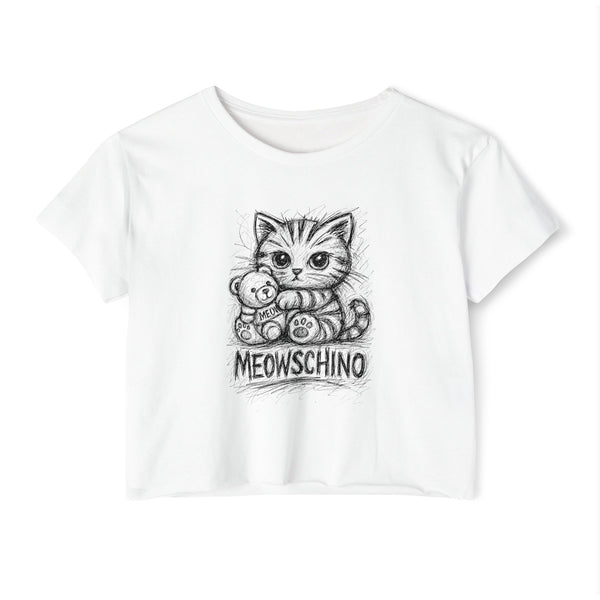
Dress like the family
Parody streetwear for the humans who serve the cat.
Questions about Japanese cat names
What is the most popular cat name in Japan?
In the 2025 ranking by the pet insurer ipet, based on pets under one year old insured from April 2025 to March 2026, Mugi came first for cats. It is the Japanese word for wheat or barley. Luna and Latte shared second place.
What does neko mean?
Neko is the Japanese word for cat. A kitten is koneko, nyanko is nursery talk for a kitty, and a cat in Japan says nyan instead of meow.
What do chan, ko and taro mean in Japanese names?
Chan is an affectionate ending used for children, close friends and pets, so Mochi Chan is like saying little Mochi. Ko means child and ends many girl names, like Aiko. Taro means eldest son and ends many boy names.
Do cats really recognize their names?
Yes. A 2019 study from the University of Tokyo, published in Scientific Reports, found that pet cats can tell their own name apart from similar sounding words. Whether your cat comes when you call is another matter.
How many Japanese cat names are there?
The Mad Cat Cartel name book has 331 names with Japanese roots. This page shows 109 of our favorites. Open the A to Z list to see every one.
Family registry
Join the family
Be the first to know about new collections from the Cartel. Unsubscribe any time.
Form MCC-1
Still not sure? Fill in the application.
Tell the Cartel about your cat in two questions. It picks from more than 4,500 names and issues a passport with what the name means.
Name
Mochi
Sex
Any cat
Style
Cute · Food
Origin
Japanese
Rarity
Common
Japanese mochi is a rice cake of steamed glutinous rice pounded until smooth and stretchy, and it is a traditional food of the Japanese New Year. Soft and squishy to say, the name suits a cuddly cat who relaxes in any lap and turns boneless when hugged.
