Looking for a funny cat name? These are 152 of our favorites from the 1,393 funny names in our A to Z list, from simple classics like Pickles and Noodle to puns that make the whole waiting room laugh.
Every name comes with what it means and the kind of cat it suits. Tap Pick a name for your cat and the Cartel chooses one for you.
Heart over technique is the spirit of Chonky Balboa, an underdog cat taking on every stair, curtain and rival toy without a plan. It reworks Rocky Balboa, the Philadelphia boxer Sylvester Stallone played in the Rocky films, keeping the fighter's grit and putting it in a softer frame. The name works best shouted from the foot of the stairs as the cat climbs.
Each one with the note it got from the Cartel desk that approved it.
Swipe the cards
Cat ID · 01 · Legendary
Chonky Balboa
Funny · Viral · Parody · English, Spanish
Heart over technique is the spirit of Chonky Balboa, an underdog cat taking on every stair, curtain and rival toy without a plan. It reworks Rocky Balboa, the Philadelphia boxer Sylvester Stallone played in the Rocky films, keeping the fighter's grit and putting it in a softer frame. The name works best shouted from the foot of the stairs as the cat climbs.
Memo from the desk of Big Paw Tony
Among my fighters, Chonky would be the example for every newcomer, because he never stays down. My own crew now works twice as hard, mostly out of embarrassment.
Sherlock Holmes, Arthur Conan Doyle's consulting detective, gets a purr in place of Sher while the surname stays untouched, so the reference reads at once. Behind it is a deductive cat who studies a new visitor's coat pockets and umbrella before trusting anyone.
Memo from the desk of Albus Whisker
He inspects every sample I carry home from the laboratory and then regards me as if the answer were obvious. I would share authorship with him on any paper, and I do not share authorship lightly.
Count Meowcula is the nocturnal cat who sleeps through daylight and rises at dusk to stalk the hallway in silence. The name reworks Count Dracula, the vampire of Bram Stoker's 1897 novel, by swapping the opening of the surname for a meow. The title Count stays untouched, so the reference is plain at once.
Memo from the desk of Capo Clawzano
Count Meowcula keeps the hours I keep, asleep while the house is busy and at work once the lights go out. A colleague who works the night without an alarm is rare in my line. If he ever wants a second career, my door stays unlocked after midnight.
Meowzart swaps the opening of Mozart for a meow and keeps the rest of the composer's surname intact. The cat it conjures performs constantly, singing at shut doors and composing a fresh complaint for every one. Mozart was famous as a child prodigy, so the name also flatters a kitten who shows talent early.
Memo from the desk of KITTØ 9
He hits the same note at the same doorway each night, and I have started hearing it as a loop. Under a quiet kick drum it almost works as an intro. The trouble is he refuses to perform anywhere but the hallway, which has terrible acoustics.
Leonardo DiCatrio slips cat into the surname of the Hollywood actor Leonardo DiCaprio, a pun for a cat with leading-man looks who poses at the window as if the cameras were rolling. The full name is long and theatrical enough for a premiere, which is half the fun of calling it from the back door.
Memo from the desk of KITTØ 9
I mixed a long intro for Leonardo, strings first and the bass held back, because he takes the stairs at that tempo. Every step lands on the one. At the bottom he waits two full bars for applause, and I give it to him every time.
Pawmesan puts a paw where Parmesan starts, and the original names the hard aged cheese of Parma and Reggio Emilia, known in Italy as Parmigiano Reggiano. Like the cheese, the name has a sharp edge, right for a cat with quick reflexes and a dry sense of humour.
Memo from the desk of Chef Paulie Gatto
Whenever somebody brings a cheese pun into my kitchen, I hand them an apron and point at the sink. Pawmesan is the one pun that stays, because it is aged properly and makes no claim to be the genuine article.
Trading the bur for a purr, Purrito borrows burrito, a diminutive of burro, Spanish for donkey, perhaps after the pack a donkey carries. The result is cosy and funny, suiting a cat who demands to be swaddled in a blanket so that only the head shows. Online, purrito names that wrapped-up pose, with whole forums of swaddled cats.
Memo from the desk of Chef Paulie Gatto
Hearing the name Purrito, every guest wants to share their dinner with the cat. Don't do it: the onion and garlic in a real burrito are poison to cats, so this cat eats from its own bowl, capisce.
The Great Catsby rewrites the title of Fitzgerald's 1925 novel about Jay Gatsby, the mysterious host of lavish Long Island parties. The cat in question is glamorous, a host who works the room at every get-together and looks happiest when the house is full. Keeping The Great at the start matters, since it gives the cat top billing on a marquee.
Memo from the desk of Purrcetti
A good party runs on a timetable the guests never see. Catsby understands this instinctively, arriving at eight sharp and leaving before anyone mentions the washing up. By New Year he will be running my seating plan, and I will finally get a night off.
Sir Chonkalot rebuilds Lancelot, the foremost knight of Arthur's Round Table, around chonk, internet shorthand for a cat of serious heft. The cat behind it is a hefty, chivalrous tom who patrols the house in an armour of fur and ends every quest at the bowl. Lancelot conveniently ends in a lot, so the chonk slips in and the name still sounds Arthurian.
Memo from the desk of Sir Scratch-a-Lot
The sofa springs filed the first complaint against Sir Chonkalot, and my own name, which also ends in -a-Lot, nearly filed the second. Both claims fail on the evidence, since his lot is weighed in kilos and mine in clauses, so buy firmer springs.
Snoozerella swaps the cinders of Cinderella for a snooze, so the fairy-tale heroine who raced the midnight bell becomes one who sleeps straight through it. The cat behind it is a pampered dreamer who treats every evening as an occasion and naps through most of it. The original's rhythm survives intact, so the name is recognised the moment it is called.
Memo from the desk of Lady Purrington
Snoozerella keeps the glass slipper and loses the deadline, which is how every fairy tale ought to be revised. Her sleep has the line of a long evening gown, and I would build a whole collection on that shape.
A paw slipped into Cleopatra, Egypt's most famous queen, gives this pun its whole charm, and the swap is so neat it barely shows. The cat for it has kohl-dark eye markings and a slow, deliberate walk, and accepts each lap offered as if it were a throne.
Memo from the desk of Clawdia
I audited Cleopawtra letter by letter and found one addition: a w that turns the queen's pa into a paw. Filed as a permitted variance. Queens have had their records bent for two thousand years, and my red pen sees no reason to start objecting now.
Doctor Whiskerstein reworks Frankenstein, the scientist of Mary Shelley's novel, usually called Doctor Frankenstein on screen, swapping the first half for whiskers and keeping the German -stein. That ending still carries a mad-laboratory atmosphere of storms and bubbling flasks, softened by the whiskers into pure mischief. It names a cat that conducts experiments on the household, nudging cups to the table edge to observe the results.
Memo from the desk of Albus Whisker
He watches my titrations from the upper shelf, as patient as a postdoctoral fellow, whiskers forward, never blinking. When a reaction fizzes over, he is the only one in the laboratory who does not flinch. He will run this department one day.
Pickles is a classic pet name for a cat that stumbles from one scrape into the next, since being in a pickle has meant being in a fix for over four centuries. The word traces through Middle English to a Middle Dutch word for brine, the liquid that keeps cucumbers sour for months.
Borrowed from German Nudel, noodle has also long served English as slang for the head, as in use your noodle, and for a silly, harmless fool. It suits a floppy cat who drapes over the arm of the sofa as if boneless and seems faintly baffled by its own long legs.
Meatball is Italian-American kitchen language more than Italian, since in Italy polpette are usually eaten on their own rather than piled on spaghetti. The word is round and comic, affectionate the way nicknames for heavy friends often are. Here the cat is chunky and good-natured, flopping over for anyone holding a brush.
Couch potato, the old American jibe at someone who spends whole evenings watching television, hands this name to a solid, sofa-bound cat. As a pet name it is plain and affectionate, an easy tease for someone you love who will not move. The shape matters too, since a well-fed cat curled up really does look like one.
Taco is Mexican Spanish for a folded tortilla, though the older literal sense is a plug or wad, and the cat it calls up bends itself double and wedges into any gap it finds. The name is cheerful and casual, a word for homes that never stand on ceremony.
Burrito is the diminutive of burro, Spanish for donkey, and also the Mexican dish of a flour tortilla folded around a filling. Called out at home, the word is snug and good-humoured, a fit for the cat that settles into any fold of blanket and refuses to leave.
Tater is the clipped, folksy dialect form of potato, a word from the farmhouse, not the restaurant. It carries a porch-swing warmth, informal and unhurried, without a trace of airs. That homely ring belongs to a cat who sleeps away every afternoon as solidly as a sack of potatoes.
A potato in plain English slang, Spud is the name for a cat who stays planted in one warm place all afternoon, solid and unhurried. The word began as a stubby knife and then a small digging spade before it reached the potato, which lends the word an earthy, garden-shed plainness.
Gizmo is old slang for a gadget whose proper name escapes you, a quick, buzzy word for anything clever and fiddly. The name sits naturally on an inquisitive cat that must inspect every new cable, box and remote control in the house. Many owners also know it as the furry mogwai in the film Gremlins, a soft, wide-eyed second meaning.
Goose is the farmyard bird known for honking at anyone who walks too close, and in English it is also a teasing word for a silly person. Together those senses give the household a loud guard, a cat that defends its ground boldly and looks ridiculous doing it. Film fans also know Goose as the cat in Captain Marvel.
Doodle is a carefree name for a cat who drifts through the day without a plan, idling from windowsill to rug as the mood takes it. A doodle was once a fool, the sense behind Yankee Doodle, and the later sense of idle drawing while thinking matches the same wandering, absent-minded mood.
Pickle comes from Middle Dutch pekel, brine, and to be in a pickle has long meant to be in a fix, while Britons also call a cheeky child a pickle. Tart and comic, it belongs to a cat that climbs into the drawer, the shopping bag or the high shelf and then yowls to be rescued.
Stinky is stink with an ordinary -y on the end, as children say of socks, bins and each other. As a pet name for a cat it is pure affection, given to the scruffy rascal who rolls in the flower bed and comes indoors wearing half of it. Owners say it fondly, as an insult only family is allowed to use.
Rocket is borrowed from Italian rocchetta, a diminutive of rocca, the distaff used in spinning, and it is the name for a cat whose idea of play is one blast along the corridor followed by a long nap. On a pet that launches from nothing grander than the sofa, the boast is comic.
Zippy describes an energetic cat who crosses the house in a blink and is somewhere else before you can turn your head. The adjective grew from zip, slang for energy, which began as the sound of something whizzing past. British viewers may also remember Zippy, the bossy puppet with a zip for a mouth on the children's show Rainbow.
Trixie, the playful diminutive of Beatrix, sounds like tricks, so it suits a sly cat that pinches pens from desks and stashes them under the rug. British punters also know a trixie as a bet made of three doubles and a treble across three selections, an extra wink for the gambler's grin in the name.
Butterball is a fond English word for a chubby person, and on a cat it means a round, contented companion who is soft from every angle. It teases without any sting, the way a grandparent might say it to a toddler. Butterball is also a well-known turkey brand, but at home it has only ever been an endearment.
Chunkie starts from chunky, meaning solid and generously built, and softens it with the -ie of nursery words, doggie and horsie among them. The cat behind it is sturdy and cheerful, a warm weight that settles on a lap and stays. Spelled with -ie rather than -y, it reads as a term of endearment, not a measurement, which is how owners mean it.
Fritz is the German pet form of Friedrich, a name whose Germanic roots mean peace and power. In American English a gadget that is on the fritz has stopped working properly, and that slang lends it a comic second edge. The cat for it is mischievous and slightly chaotic, the one who knocks the router cable loose at the worst moment.
El Gato, simply the cat in Spanish, names a self-possessed cat who needs no more introduction than the article and the noun, and who answers only when he chooses. On a person it would be the handle of a card player or a night-shift legend whose real name nobody at the table remembers.
Group 02 · 15 names
Chonky cat names
For the big boned. The cat is not fat, the cat is a lot of cat.
Chonk is the web's fat-cat word at its barest, with no ending to soften it, and it lands like one firm thump. Shouted at mealtimes, it summons a heavyweight cat who plants itself mid-hallway and lets the household step around it.
Chonkzilla grafts chonk onto Godzilla, the towering monster that first stomped through Tokyo on screen in 1954, and borrows the habit of adding -zilla to whatever looms too large. The result is monster movie mayhem on a domestic scale, and the cat in it stomps past the bedrooms as if a city lay below.
Chonk, a meme term for a very large cat, took off in 2018 on a viral cat-size chart, and Lord Chonkers hands it a peerage and a jolly -ers. The result is pompous, a family crest for sheer mass. The cat in question is heavy, unhurried and grand, receiving visitors in state on the bed.
Chonk Kong rhymes its way onto King Kong, the giant ape of the 1933 film, trading the crown for a meme word without losing any drama. The swap is fond and bold, and the cat behind it treats the back of the sofa as a skyline, surveying everything below from up there.
A cat that strides across the living room like a monster film creature stomping through a toy city is the picture behind Chonkzilla, the chonk meme joined to the -zilla tail borrowed from Godzilla. With the Baron ahead of it, the monster also gets a peerage, so the chaos arrives titled and waits for a proper introduction.
Chunkopotamus swaps the hippo of hippopotamus, Greek for river horse, for chunk, and keeps the grand Greek tail so the whole word rings almost zoological. The tone is jolly and fond, and the round cat wearing it moves through the house the way a hippo moves through a river, calm and entirely in charge.
Chonkasaurus fits chonk onto the -saurus of museum dinosaurs, so the cat becomes a gentle giant from the fossil hall who plods across the floor with tremendous patience and shakes the boards on landing. With the dinosaur ending, a fond joke about weight gains a fossil's grandeur.
The -zilla ending comes from Godzilla, the giant film monster, and it gives whatever it touches the air of a city-flattening threat. Here the threat is a belly, which keeps the menace theatrical and entirely harmless. Expect a round cat stomping across the landing belly first, with the slow grandeur of a monster wading ashore.
Chonkulus Maximus is for a cat of vast, unhurried presence with an emperor's bearing and a cushion's ambitions. The name pulls two ways, since -ulus is a Latin diminutive ending, as in circulus, a little circle, while Maximus means the greatest. Chonk, a hefty pet in online slang, ends up both little and greatest, a contradiction any owner who has tried to lift one will recognise.
Sultan was the title of rulers from Cairo to Istanbul, and Chonko adds a matey -o to chonk, slang for a hefty pet. Together they crown a heavyweight cat who governs from one warm corner and receives the household whenever the dish is filled. Fond owners often split it in daily use, Sultan for guests and Chonko on the sofa.
Sir Gigachonk dubs a proud, gloriously round cat with a mash of Gigachad, the meme of a man with impossible jawline confidence, and chonk, which online cat fans use for pets of generous build. Giga is the prefix for a billion, so the name promises chonk on a grand scale and the self-assured calm to carry it.
Zuri is a Swahili given name for beautiful, and putting it beside chonk declares that a heavy cat is a beauty. The cat behind it is proud of every ounce, poses where she will be admired and never apologizes for taking up the whole sofa. Read together, the two words make a compliment unwilling to choose between elegance and size.
Chonquette names a heavyset cat of polished manners, taking chonk, meme slang for a well-rounded pet, and finishing it with the French -quette. The spelling copies croquette and banquette, so a cat of serious heft gets a mock-elegant label. Owners tend to say it with a little bow, half tease and half respect.
Odin, chief god of the Norse pantheon, counts Harbard, Old Norse for Greybeard, among his many names, and Chonkbeard swaps that old colour for sheer bulk. What remains is a solemn, wise-sounding title, and the cat under it is heavyset, surveys the room from one spot and rises only when supper is called.
Ivan Chonkov follows the full Russian pattern of given name plus surname, for a heavyweight cat who eats with total concentration: Ivan, Russian for John, then chonk with the surname ending -ov. In Russian surnames -ov marks belonging, so Ivanov first meant Ivan's son, and Chonkov reads as one of the chonk clan. The formal pattern gives the internet joke a dignified ring.
Group 03 · 15 names
Famous name puns
History, art and cinema, with a little extra purr.
Purrcasso threads a purr through Picasso, the Spanish painter who co-founded Cubism and painted faces as stacks of angles. The pun is quick and inventive, and it keeps the painter's reputation for restless experiment intact. Expect a cat who sweeps things off shelves to see how they land and rearranges cushions without asking.
Purrdini is Houdini with a purr, borrowing the name of the most famous escape artist of all. It belongs on a cat who slips harnesses, opens latched cupboards and appears on the wrong side of closed doors in total silence. Shouted at bedtime into a quiet house, the name could open a stage act.
Napurrleon hides a purr in Napoleon, the Corsican-born general who crowned himself emperor in 1804. The name is grand and somewhat absurd, the kind a household gives a pet who acts as if every room needs conquering. It goes to a commanding cat who inspects each room in turn and issues orders with the tail.
Purrthagoras slips a purr into Pythagoras, the Greek thinker from Samos whose name is attached to the theorem about right-angled triangles. The cat behind it is a geometer at heart, measuring the angle from sofa arm to bookshelf before every jump. Anyone who sat through school geometry hears the original at once, which is why the pun lands so easily.
Julius Caesar was the Roman commander and dictator whose surname went on to become a title, the root of the German Kaiser and the Russian tsar. Swapping Julius for Meowlius keeps the gravity and adds a cat's call, so Meowlius Caesar comes out grand and a touch absurd. It sits best on a cat who regards the household as conquered territory and expects reports at mealtimes.
Indiana Jones, the archaeologist adventurer Harrison Ford first played in Raiders of the Lost Ark in 1981, lends his first name, and paws stand in for Jones. Expect an adventurous cat who raids cupboards like tombs and returns from beneath the stairs looking pleased with the find.
Hermione, a Greek name carried in myth by the daughter of Helen of Troy and in modern fiction by a famously bookish young witch, gets a purr up front for a clever cat who is a little bossy and always aware when dinner is late. The pun is mild, so it could still sit on a school register.
Meowlinroe calls for a cat with drowsy, half-closed eyes and a talent for lounging across the bed like a screen siren between takes. It squeezes Marilyn Monroe into three syllables, opening on meow, and gives the Hollywood star of the 1950s a feline remix.
Catniss reworks Katniss Everdeen, the archer heroine of Suzanne Collins's The Hunger Games, by putting the cat right at the front of her name. The cat behind it is brave and independent, a patient stalker of toys who rarely misses.
Frank Catstello hides a cat inside Frank Costello, nicknamed the Prime Minister of the Underworld, and the calm cat behind it settles household quarrels with a look instead of a swipe. The plain first name keeps the tone diplomatic rather than dangerous. Heard with Italian ears, Catstello also echoes castello, a castle, and the house quickly becomes one.
Lucky Meowciano is built to be said out loud, with a meow standing where Luciano used to begin, so the old gangster name comes out as a greeting. The Lucky part reads as a promise, not a boast. Talkative cats get the most out of it, the theatrical kind who answer each call with a remark of their own.
Purrus Maximus calls up a cat with the build of an arena champion, deep-chested and slow to back away from anything. It purrs its way into Maximus, Latin for greatest and the name of the general forced into the arena in Ridley Scott's Gladiator. The Roman sound gives it weight, and the purr keeps it domestic.
Meowdonna sets a meow inside Madonna, the Italian for my lady that also became a title of the Virgin Mary in art. Most listeners now think of the pop star first, so the pun carries reverence and showbiz together. The cat it suggests strikes a pose by instinct whenever anyone lifts a phone.
Purrtacus puts a purr inside Spartacus, the Thracian gladiator who led a great slave revolt against Rome from 73 to 71 BC. His name has stood for refusing orders ever since, so the pun stays on defiance rather than combat. It fits a rebellious cat who refuses the carrier, the harness and any closed door on principle.
Mewthor hides a kitten's mew at the front of Thor, so the Norse god of thunder and storms begins with the faintest sound a cat can make. Behind it is a confident young cat with a thin voice and a thunderous temper whenever dinner runs late.
Duchess Fluffington gives fluff the stately English -ington of Wellington and Darlington, then raises it to the top rank of the peerage. The teasing of the aristocracy stays affectionate, a portrait in oils of a powder puff. Expect a lavishly coated cat to receive her brushing like a royal audience.
A bellyflop is the dive that goes wrong, a flat landing on the stomach and a wide splash, and the barony makes the mishap sound inherited. This is a cat who launches off the bed with total confidence, lands in a heap and rises as though that was the plan. The repeated b sounds land like a slapstick silent-film pratfall with a peerage attached.
Baron Von Floof sets an internet word for fur behind a Germanic noble particle, the kind of signature a Prussian officer in a comic opera might scrawl across a dispatch. The cat who carries it has a ruff as dense as the fur collar on a dress uniform and keeps a stiff, formal posture to match.
Count Snugglepants hangs a European noble's title on snugglepants, the soft, silly pet word people use for a toddler in pyjamas or a partner on the sofa. The cat in mind keeps aristocratic manners until a warm lap appears, then drops all ceremony and burrows in.
A duke ought to sit still for his portrait, yet the cat behind Duke Wiggles cannot hold a pose for a second and squirms out of every pair of arms that tries to keep him. The title sets up pomp and the second word knocks it over, so the name stays friendly and silly.
Snacc, the online spelling of snack, also works as slang for an attractive person, and The Absolute crowns it with the epithet of a ruler whose power has no limits. Lord on top makes him a tyrant of the snack drawer, the sort of cat who expects every snack as tribute and rules the kitchen by decree.
The cat in Sir Pancake The Immovable settles on a warm lap or a folded blanket and simply stays, as stubborn as the last pancake stuck to the pan. The knighthood and the heroic epithet borrow from legends of champions who never yielded, and setting them beside a breakfast staple keeps the grandeur cosy.
Earl of Earfold hands a peer's title to the Fold breed's signature feature, the ears that lie folded flat against the head like a cap. The mock-peerage rhythm, title then estate, fits a dignified cat that receives guests from the armchair as if holding court.
Lady Whiskerly adds the -ly of sisterly and motherly to whisker, so it reads like an adjective, in the manner of whiskers, dressed up by a title. It calls up a cat of fine manners and keen interest, one who checks each visitor's hand with a brush of whiskers before allowing any stroke. Heard quickly, it also passes for a manor surname of the Bradley or Ashley kind.
Queen Purr crowns the contented rumble of a happy cat, so the name rules by sound rather than by decree. It belongs to a cat of regal habits who presides from a lap and lets the purring announce that the audience has begun.
Baron Wobble The Round copies medieval chronicles, which tagged rulers with epithets such as Charles the Bold or Louis the Fat. Here the epithet is earned by the walk, a gentle sway from side to side as this padded cat tours the hallway at his own pace. The Round sounds grand in that style, while the barony keeps the wobble dignified.
Count Wiggletail sets a nobleman's title over a tail that never settles, and the cat who answers to it twitches at the tip even in sleep. A count brings to mind candlelit halls and slow, deliberate manners, and the restless tail spoils that composure every time.
Sir Noodle The Destroyer knights a floppy noodle and adds a conqueror's epithet, for a gangly cat at war with anything that dangles. Sir and The Destroyer frame it like a warlord's full title, yet the soft noun in the middle keeps every threat comic. The whole title takes a breath, so most days it shortens to Noodle.
Imperator was the Latin acclaim shouted for a victorious Roman general and later a standing title of the emperors. Here it heads Floofus, the web word floof for a fluffy pet given a faux-Latin -us, so it sounds pompous and soft together. Its cat wears a flowing coat and a lordly streak, receiving visitors on the sofa arm and taking every brushing as a ceremony owed to him.
Floof Emperor seats a cat in a cloud-thick coat on the highest throne in the language, with floof, the web's word for that coat, standing in for the ermine robe. The title is grand and the fur is soft, so the result is gentle mock majesty, a coronation performed with a hairbrush.
Group 05 · 15 names
Funny food names
Snack inspired names for the cat who supervises every meal.
Meowzarella swaps the start of mozzarella for a meow, and the cheese itself is named for the southern Italian mozzare, to cut off, after the way it is cut and shaped by hand. The pun is soft and silly, and it lands on a cat that stretches out over any warm surface for hours.
Bram Stoker's vampire count keeps his title and cape here but changes his thirst, hunting snacks where the original hunted blood. The nocturnal cat behind the pun dozes away the daylight hours and stalks the kitchen after midnight, leaving one torn wrapper on the counter as its only signature.
Pickleton could be a village on an old English map whose only industry is pickling, and Sir makes its most important resident a knight. The cat for the title keeps a sour expression all day and inspects each visitor with the slow disapproval of a country squire. The -ton ending copies real names like Middleton, so the title sounds genuine right up to the pickle.
Meatloaf is the plainest dish on a weeknight table, the opposite of anything a lord would order, and that clash is the whole joke. Loaf also nods to the way cats tuck their paws away and sit like a neat block. Together they call up a homely, friendly cat with a duke's posture and a farmhouse heart.
Biscuitus Rex dresses biscuit in a schoolroom Latin -us and crowns it with rex, king, so a teatime word looks like the inscription on a royal seal. The cat in question is a gentle ruler whose court gathers around the treat tin.
Dumplings, the soft parcels of dough found in nearly every cuisine from Chinese jiaozi to Polish pierogi, receive a ducal title here, and the cat who answers to it is heavy, unhurried and proud of both. The title gives a plain comfort food a mock-grand air, as if the dumplings owned land and a family crest.
Tater, the homely word for a potato, sits beside tank, all armour plating, so the pair could be a potato field called up for duty. The cat in question is steady, parking himself in the hallway to inspect every visitor's shoes before anyone passes. Under a Lord, the spud regiment has an aristocratic commander, and the rhyme of Tater and Tank comes out grand rather than plain.
Baron Snack Mountain ennobles the heap of crisps and treats every household hides somewhere, as if the stash were an estate with its own peak. Picture a stately cat with a keen nose, receiving each rustling packet as tribute paid to the manor.
Señor is Spanish for Mister, and frijoles are beans, the everyday stewed or refried kind at the heart of Mexican home cooking. The formal title goes to a humble staple, and the cat behind it is easygoing and well mannered, first through the door whenever a pan rattles. Nobody raises a voice at a cat they have just addressed as Señor.
Lord Chicken Nugget raises a breaded fast-food bite to the peerage, and the cat it describes is a self-important aristocrat who accepts tribute from the armchair. Chicken is also old slang for a coward, lending the lordly title a nervous wobble. Read out at a dinner party, it resembles a children's menu item demanding a crest.
Nug, the clipped form of nugget, can mean a lump of gold or a breaded bite, and adding lord makes either one sound like inherited wealth. The bearer is a proprietorial cat who keeps a hoard of bottle caps and hair ties under the bed and inspects it every night.
Burritoking could be painted on a roadside food truck by hand, grand on the board and modest at the window. The royal title on a humble wrap gives it a cheerful, self-made swagger. The king in question is an unhurried cat who holds court from the warmest tile and receives visitors without getting up.
Mr Ramen gives a humble bowl of Japanese ramen the title of Mister, the way regulars address a corner shop owner. The cat that answers to it is cosy and unpretentious, a friendly fixture who says hello to every guest and expects a chat in return. The Mr keeps it neighbourly rather than grand, closer to a greeting over the fence than a knighthood.
Purrito Supremo goes to the cosy cat who likes to be swaddled in a throw until just the face peeks out, the swaddle known online as a purrito, a burrito that purrs. Supremo, Spanish for supreme, gives that bundle the grand billing of a deluxe special.
Flattened across the duvet, wide as a pancake and as immovable as a tank whenever someone tries to make the bed, the cat behind Sir Pancake Tank holds the mattress like a fortress. The knighthood is pure pomp, and the clash between breakfast and armour keeps it sweet-natured and silly.
Group 06 · 15 names
Funny villain names
Dramatic names for the little menace of the house.
Count Fluffula swaps the blood out of Bram Stoker's Dracula for fluff, keeping the title and the cape and trading the fangs for a ruff. A cat in a dense coat that lurks under the drapes at dusk and swoops at ankles, with all the menace of a feather duster, is the household's own count. There is a spooky, theatrical edge here without one real fright in it.
Foldemort replaces the Vol of Voldemort, the dark wizard of Rowling's Harry Potter novels, with the Scottish Fold's name, and the result belongs to a cat with folded ears and a theatrical, scheming streak. The breed's ears bend forward and down because of a gene that affects cartilage, so the face takes on an owlish, capped look. On that gentle face the villain's name lands as comedy rather than menace.
Beelzepaw reworks Beelzebub, from the Hebrew Baal Zebub, a Philistine god whose title is commonly rendered lord of the flies. Paw replaces the old ending, so the grand infernal title now doubles as a job description. The natural bearer is a gleeful cat who stalks every housefly in summer and keeps a perfect record of catches.
Gobblinstein grafts the -stein of Victor Frankenstein, the young scientist in Mary Shelley's novel, onto gobble, with a goblin hiding in the spelling, so a gothic tale of creation gets a greedy appetite. The cat in question experiments on every cupboard door in search of food, with the wild-eyed focus of an inventor in a thunderstorm.
Slendermew reworks Slender Man, the tall, faceless figure invented on an internet forum and spread through eerie edited photographs, and swaps the man for a mew. The cat it names is a long, quiet shape that appears at the far end of a dark hallway and is gone when the light comes on. The mew softens the horror into a joke a household can laugh at.
Sassquatch slips sass into Sasquatch, the hairy wild man of Pacific Northwest folklore, whose name derives from the Halkomelem word sasq'ets. It belongs to a cat with thudding footsteps and plenty of back-chat, who answers every remark with one level stare and leaves fur behind like tracks in the mud.
Meow Diablo pairs diablo, devil, with the most harmless sound a cat makes, and so suits a cat who announces each act of mischief with a polite meow before sweeping the glass off the table. Sweet at the front and wicked at the back, the name acts like a troublemaker who asks permission and never waits for the answer.
Grim comes from Old English grimm, fierce or severe, and whisker puts it on a cat's face. Grimwhisker gives that gothic gloom to a stern cat who watches the household from the stairs with a permanent frown. It also echoes grimalkin, an old word for a cat long tied to witches' familiars, so the name keeps a witchy shadow.
Every toppled pen pot and midnight sprint across the landing points to a cat in charge of disorder, and Major Meowhem hands that cat a rank to go with it. The pun swaps the opening of mayhem, wild and noisy disorder, for a meow, while Major supplies the brisk military snap. Barked across a room, the full title comes out as a commendation for chaos, not a scolding.
Banepaw borrows Bane, the masked Batman villain best known for breaking the hero's back, and gives that heavy menace to a cat who flattens each toy mouse in one deliberate stomp. Bane was an ordinary English word for ruin long before comics took it, so it lands even for owners who never read one.
The chief of the imps blamed for every household fault gets a title in Gremlord, which clips gremlin and lord into one word with the ring of a fantasy villain. Give it to the cat who presides from the top of the stairs, watching everyone trip over the toys it left there.
David Bowie's Jareth in the 1986 film Labyrinth is the best-known Goblin King, a ruler of glitter, mischief and very tall hair. Here the title crowns a cat who rules the flat from the sofa arm, hoards anything shiny and expects thanks for it.
Demonius is a playful invention that dresses the English demon in a Latin-style ending. Demon itself comes through Latin daemon from Greek daimon, which originally meant a spirit or divine power rather than anything evil. The result sounds grand and mock-scholarly, best on a mischievous cat who causes havoc with an air of great learning.
Salem is usually traced to the Hebrew root of shalom, peace, though popular culture ties it firmly to witches and their cats, and the Spellcat epithet swaps the caster in spellcaster for a cat. The title sounds bookish and whimsical, a good fit for a cat who sits on open books and stares at the pages as if reading the instructions.
Clawdemona puts claws on Desdemona, the heroine of Shakespeare's Othello, a name usually traced to the Greek dysdaimon, ill-fated, and the new spelling leaves a demon in plain view. The result is theatrical and wicked in equal measure, a name for the cat who plays the tragic heroine at dinner and the villain by midnight.
Group 07 · 15 names
Silly sounding names
Names that are funny just to say out loud. Try Bingus.
Bingus is the internet's affectionate name for a bald, wrinkly Sphynx-type cat, after a 2020 Instagram video of one grew into the Hi Bingus meme on Reddit and Twitter. On a hairless cat that leans in, relaxed and warm, the name is less a joke than a correct label.
Blorbo is Tumblr slang for a favourite fictional character, first posted mockingly on Christmas Eve 2021 and soon embraced by the very fans it teased. On a cat it marks the household's favourite character, the one whose every yawn gets narrated and whose minor dramas are followed like a series. Used lovingly, it admits a mild obsession and apologises for none of it.
Any cat who simply sits down wherever it happens to stop sounds right as Blungus, with its lumpy, thudding start and an -us ending borrowed from Latin nouns. Nobody coined it with a meaning in mind, though it rhymes with Chungus, the meme name, and many people catch the echo. That rhyme and the dignified ending keep it funny in a deadpan way.
Boing is the noise a cartoon spring makes as it lets go, and the -us ending adds a mock-Latin wobble. The cat answering to Boingus is spring-loaded and leaps straight up the moment a paper bag crackles.
Bongos are the pair of small hand drums that came out of eastern Cuba and drive son and salsa, so the name has a built-in beat. It points to a cat who announces itself, thumping down the stairs and drumming on the door at breakfast. Its two round syllables land like two quick hand strikes, one for each drum.
Bonkers is British slang for crazy, and the word itself seems to clatter about like a saucepan lid hitting tiles. It carries no malice, the way a parent says it about a child on a sugar high. Give it to a wild cat whose evening zoomies take in the curtains, the hallway and somebody's ankles.
Flonkus is a made-up word, and the ungainly cat it describes lands every jump a fraction late, with a gentle thud and total self-assurance. The blunt -onk in the middle does the comic work, while the stately -us at the end lends that thud the pomp of a Latin inscription.
Derp, slang for a blank, dim-witted moment, is first recorded in the 1998 comedy BASEketball, and Derpus adds a Latin-looking -us so the cat who bumps into the glass door gets a scholarly title for it. The mix is grand and silly at once, like a philosopher who walked into a slapstick act and stayed.
Dingus began in American speech as a word for a thingamajig, borrowed from Dutch dinges, thing, and later became a fond insult for an endearing fool, which describes the cat: well-meaning, clumsy and briefly lost in its own hallway. Nobody says it in anger, only fondly, the way friends tease.
In English, bloop names a soft, hollow sound, the plop of a drop falling into water. The doubled o and the soft closing p give it a full, bubbly sound, more like a gulp than a word. The cat called Bloop is quiet and curious, with one low chirp where the meow should be.
Bleppo is a contented cat whose tongue tip slips out mid-nap and stays out, unnoticed, for the rest of the afternoon. Blep gets the chummy -o of kiddo and weirdo, so a passing habit becomes a pal's name.
Borfus fits a cat who objects to everything, each objection delivered as a single lazy grumble from the cushions. Borf has no dictionary entry and is simply a low, gruff sound, and the -us of Latin nouns gives that grumble a pompous finish. On a collar tag it suggests a minor Roman official with a grievance.
A cat with a chancer's charm, who gets the treat tin opened by sitting beside it looking tragic, answers best to Flimbus. It plays on flimflam, the old word for humbug and swindling, and the rounder -bus ending makes the trickster more fairground magician than pickpocket.
Blep is DoggoLingo, the internet's fond pet talk, for the moment an animal leaves the tip of its tongue poking out, and it caught on through a Reddit forum devoted to cat photos. Adding -ster, the ending of trickster and prankster, makes a habit of it. Blepster names the cat who forgets to tuck the tongue back in and stares at visitors, deadpan, as if nothing were wrong.
Dingdong is the sound of a doorbell, and it belongs on the cat who races to the hall at every ring and announces each caller at twice the bell's volume. In slang a ding-dong is also a foolish person, so the name stays cheerful and teasing instead of stately.
Group 08 · 15 names
Funny girl cat names
For the lady who knocks your coffee off the table and stares at you.
Loafina gives loaf the Italian feminine -ina of ballerina and signorina, so a humble bread word gains a dancer's grace. The loaf here is the pose with legs folded away and body squared off like a fresh bake. Picture a cat spending whole afternoons in that shape, soft, settled and quietly content with it.
Hissabelle grafts a hiss onto Isabelle, a French form of Elizabeth, so a graceful old given name opens with a warning. Picture an elegant cat who could pose for a portrait yet answers an unwanted cuddle with a crisp, polite hiss. The belle at the end still means beautiful in French, so the compliment survives the attitude.
Purrinella wraps a purr in the Italian ending of Pulcinella, the hook-nosed clown of Neapolitan comedy, and it suits a theatrical cat who purrs loudest when she has an audience. That clown later crossed to England as Mr Punch, so the name hides a whole puppet show of mischief inside a soft, purring sound.
Pawlette tucks a paw into Paulette, a French feminine diminutive of Paul. Chic and composed, it suits a cat who offers one paw to be admired before she will accept a stroke. The French -ette ending is affectionate, as in fillette, a girl in everyday French, so the pun keeps its warmth.
A gremlin is the imp RAF airmen held responsible for every fault in their aircraft, and the French -ette of kitchenette and novelette gives it a dainty, ladylike finish. The result is a pretty cat with a gremlin's habits, sweet-faced while she unties shoelaces and hides earrings under the rug.
Nibblissa gives the humble verb nibble the grand ending of Clarissa, a lofty name for a cat who dines in slow, ceremonious bites and pauses between each one as if receiving guests. That -issa is the Greek ancestor of the English -ess in princess and duchess, so the name all but makes her a lady of the bowl.
Picture a cat who trails a long, full coat over the rugs like the train of a gown, and you have Puffarella. It is built like the English Cinderella, a plain household word given the feminine -ella. Here the word is puff, so the fairy-tale heroine is a puff of fur, not a girl from the ashes.
Meowdora borrows -dora, Greek doron, gift, as heard in Theodora and Isidora, so the cat it names is introduced as a gift of meows. The result is stately and a touch theatrical, an empress-style name answered by a chirp.
Dozephine hides doze inside Josephine, the classic female counterpart of Joseph, and keeps every bit of its old-fashioned poise. The cat it names is a graceful sleeper who drifts off mid-conversation and wakes looking as if she never left.
Jellybellina describes a kitten who flops over to show off a wobbly belly, then grabs the hand that tries to rub it. Hidden in the name is jelly belly, the comic English phrase for a soft stomach, and cats really do carry a loose flap of skin there, the primordial pouch.
Whiskerella suits a cat with a rags-to-riches story, perhaps a rescue who went from an outdoor shed to a velvet cushion indoors. It trades Cinderella's cinders for whiskers, keeping the -ella ending that gives the heroine her storybook sweetness.
Miaoura opens with miaou, which is how French writes a meow, and ends in aura, Latin from Greek for a breeze, later a glow around a person. Joined, the halves suggest a call that leaves something shimmering behind. The cat for it is elusive, appearing at dusk, sitting at a distance and vanished by the time someone reaches for a camera.
Snurl sounds like snore and curl run together, and it is also an old dialect verb for turning up the nose in disdain. With the prim French -ette attached, it sketches a drowsy cat who dozes in a tight curl and grumbles at anyone who tries to lift her.
Duchess Claw sets a title of high rank beside the sharpest tool a cat owns, and the pair comes out grand and slightly dangerous. It fits a dignified cat who accepts admiration only from the far side of the room and keeps it there with a lifted paw. Called through the house, the soft first word arrives ahead of the hard second one, so even a summons carries a warning.
Russian homes traditionally call female cats Murka, from mur, the Russian imitation of a purr. Once wobble is attached, the picture is a cat who purrs with total steadiness and walks with none, tipping sideways mid-stretch. The Russian half sounds homely and old-fashioned, and the English addition teases it gently, the way relatives tease a favourite.
Group 09 · 15 names
Funny boy cat names
For the boy who runs into the glass door every day and never learns.
Captain Meowpants is a cat twist on Captain Underpants for the cat who races along the hallway in a heroic mood, as if wearing a cape over nothing but its fur. The original is the cheerfully silly superhero of Dav Pilkey's children's books. Swapping Under for Meow keeps the original's rhythm and cheek intact.
Mr Beans plays on Mr Bean, Rowan Atkinson's nearly wordless comic character, and the cat behind it is a silent clown whose disasters unfold without one meow. The extra s nods to the beans on a cat's paws and makes the title read as a pet name. Keeping the Mr gives it the mock-formal tone of someone scolding a cat they adore.
Goof covers both a blunder and the person who makes one, and boi is the playful online spelling of boy, familiar from good-boi captions under pet photos. Put together, the two halves make a fond telling-off shouted across the garden. The cat behind it falls off the sofa arm, looks around in surprise and climbs straight back up to try again.
Beanlord fixes -lord to the end of a humble word the way overlord does, so a modest pet word suddenly claims territory. The cat it crowns is territorial and bossy, ruling its patch of the house and demanding tribute from any passer-by. Lord, arriving after bean, has the air of a promotion nobody signed off.
Gremlinboy is what a parent calls a child caught red-handed, half scolding and half affection. The cat for it is a young tom who shreds the toilet roll, scatters the litter then sits blinking in the doorway, innocent as a choirboy. The plain English pairing keeps it affectionate, closer to a pet name than an insult.
Wigglyboy is nursery talk aimed at the kitten whose whole body joins in when he is pleased, tail, shoulders and back end going at once. The -y on wiggly keeps it nursery-soft, and boy lends it the warmth of a call across a park. It is the boyish cousin of good boy, the praise usually saved for dogs.
Chonky and boy run together the way owners praise a heavy pet in baby talk, part compliment, part teasing. The cat who earns it is a big, easygoing male who strolls up to every guest and offers his belly to anyone kneeling. Boy keeps it fond, not rude, so the weight remark never stings.
Longboi is DoggoLingo, the jokey dog-speak of the web, for any animal of improbable length, with boi standing in for boy. Cats have their own meme of length in Longcat, a photo of a cat held up at full stretch that spread across image boards in the 2000s. Easygoing cats who sleep fully extended and seem to gain a foot whenever lifted are its usual bearers.
Nugboi is pure caption language, the sort of name typed under a photo before anyone thinks to say it out loud. The cat it describes is a bouncy, uncomplicated companion who sprints the hallway at dusk and then flops wherever he lands. Nug is clipped from nugget, so a hint of something precious survives inside the meme spelling.
Booplord promotes the boop, the playful noise owners make as they tap a pet's nose, to the peerage. He is a commanding cat who governs the household by booping, pressing his nose to every hand, cheek and shin that passes within reach.
A cat who drops sideways onto the carpet the moment anyone comes near, and then lies there awaiting admiration, is the Flop Lord: flop for that boneless full-length collapse, lord for the rank attached. The title is comic and mock-grand, and the cat performs the whole routine with complete gravity.
Count Beanington is a title for a watchful cat with the airs of minor nobility, and because count doubles as a verb, the name smuggles in bean counter, English slang for a fussy accountant. The -ington ending adds a landed-gentry surname, the kind cut into a stone gatepost.
Sir Meowsalot borrows the knightly ring of Sir Lancelot and swaps the lance for the habit this cat is known by: it meows a lot. The title stays perfectly straight while the surname confesses everything. Behind it is the vocal cat who opens every conversation in the house and closes nearly all of them.
Captain Claw is also the hero of Claw, a 1997 platform game from Monolith Productions about a pirate cat called Captain Nathaniel Joseph Claw. The alliteration gives it a swashbuckling, Saturday-cartoon bounce. The cat to carry it climbs the bookshelves like rigging and surveys the home from the top deck.
Herr Schnurrbart is German for Mr Moustache, a formal name for a cat with whiskers grand enough to need wax. Schnurrbart came from Low German Snurrbaart, snout beard, yet its first half is spelled like schnurren, to purr, and a single whisker is a Schnurrhaar, so the pun almost comes with the language.
All funny cat names, A to Z
Open the full list, A to Z. Tap any name to read what it means and issue its passport.
One you can say with a straight face at the vet. Food names like Pickles, Noodle and Meatball are popular because they are short and silly, and puns like Purrlock Holmes work best on a cat with the personality to match.
Are funny names a good idea for a cat?
Yes, as long as you like saying it. You will call the name thousands of times, so pick one that still makes you smile on a Monday morning.
Do cats really recognize their names?
Yes. A 2019 study from the University of Tokyo, published in Scientific Reports, found that pet cats can tell their own name apart from similar sounding words. Whether your cat comes when you call is another matter.
Are the famous names and brand puns connected to real people or brands?
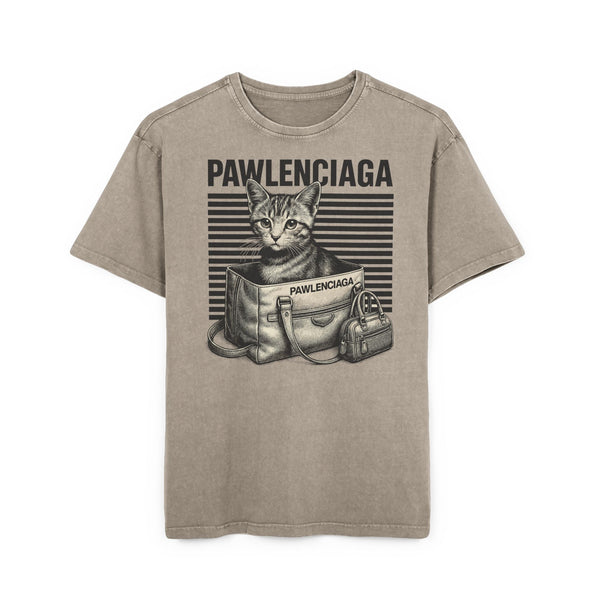
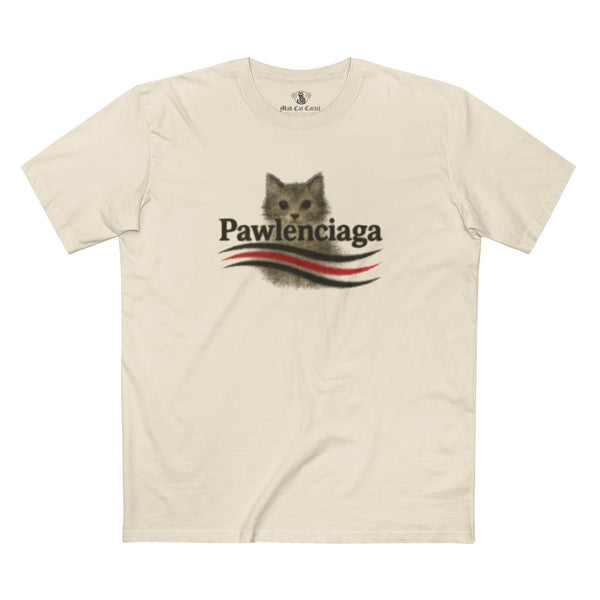
No. Names like Leonardo DiCatrio and Pawlenciaga are parody, in the same spirit as our Parody Collections, and are not connected to the people or brands they play on.
How many funny cat names are there?
Our A to Z list holds 1,393 names tagged funny. This page shows 152 of our favorites. Open the A to Z list to browse them.
Family registry
Join the family
Be the first to know about new collections from the Cartel. Unsubscribe any time.
Form MCC-1
Still not sure? Fill in the application.
Tell the Cartel about your cat in two questions. It picks from more than 4,500 names and issues a passport with what the name means.
Heart over technique is the spirit of Chonky Balboa, an underdog cat taking on every stair, curtain and rival toy without a plan. It reworks Rocky Balboa, the Philadelphia boxer Sylvester Stallone played in the Rocky films, keeping the fighter's grit and putting it in a softer frame. The name works best shouted from the foot of the stairs as the cat climbs.


 Big Tony
 Clawzano
 Paulie Gatto
 Purrcetti
 Sir Scratch
 Lady Purrington
 C. Velluto